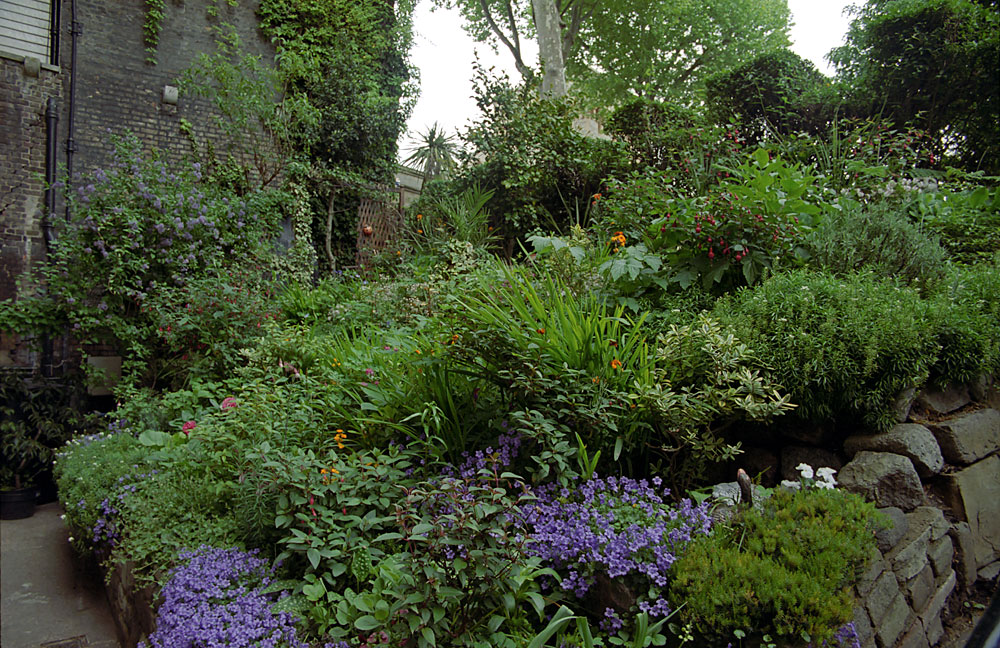
Landscaping outside the entrance to the Beauchamp Tower at the Tower of London. Photo May 2003.
Landscaping outside the entrance to the Beauchamp Tower at the Tower of London. Photo May 2003.
I received a press release about an upcoming book by Philippa Jones titled Elizabeth VIrgin Queen?
Here’s the info from the release (which you can also download as a PDF):
Spotted via the Lady Jane Grey Reference Guide Blog, an article about Katherine and Mary Grey by Leanda de Lisle at The Mail Online this weekend:
Loved-up then locked up by the Virgin Queen: The story of Katherine and Mary Grey
Few people remember them today, but nearly 500 years ago Katherine and Mary Grey
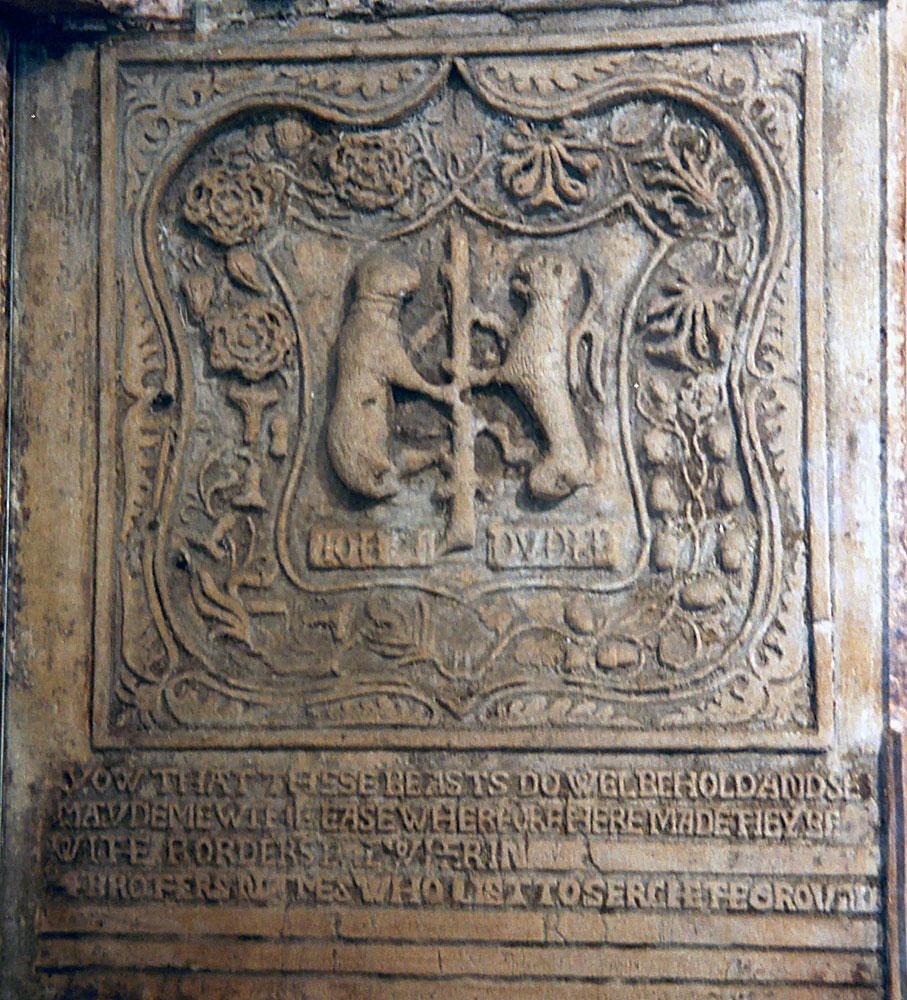
Carving in the Beauchamp Tower of the Tower of London. Photo May 2003.
This carving was done by John Dudley (the son of John Dudley Duke of Northumberland) while he and his brothers were held in the Beauchamp Tower following the short reign of Lady Jane Grey and the Wyatt Rebellion in the reign of Mary I.
The carving reads: “You that these beasts do well behold and see, may dem with ease wherefore here made they be, with borders eke within [there may be found] 4 brothers names who list to search the ground.”
This is the first time in a few weeks I’ve had a few stories stack up so I could do a “short takes”!
* First up, from Foose, a review from the Spectator of G.W. Bernard’s book “Anne Boleyn: Fatal Attractions” (which I posted about back in February)
* More excavations at the site of The Theatre in Shoreditch (previously mentioned here and here) are going on this summer, and you can follow along at the Museum of London’s “Working Life of the Museum” blog (here’s a
Archaeology News, Book news, Re-enactments and Re-creations, Shakespeare 1
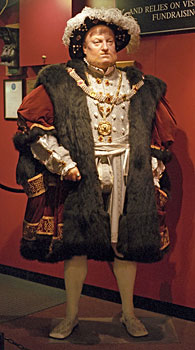
Wax figure of Henry VIII at the Mary Rose museum. Photo June 2000. This is one of those collisions of the two major aspects of my life – space and Tudor history – that I didn’t quite expect. Pretty cool! News release from the Portsmouth Historic Dockyard website:
During their visit to Portsmouth, the Atlantis Space Shuttle crew were presented with a piece of the Mary Rose, the flagship of King Henry VIII, with a view to sending it up to space on a future mission. The presentation took place at a gala dinner Sunday 27th June, on board HMS Warrior 1860, another ship that accompanies the Mary Rose at Portsmouth Historic Dockyard.
And I thought this was an interesting tidbit: This won A teaser of what’s to come? BTW, if you’re following Henry 8.0 on Twitter, you’ll see that he wasn’t too happy with today’s World Cup match… From The Portsmouth Historic Dockyard website:
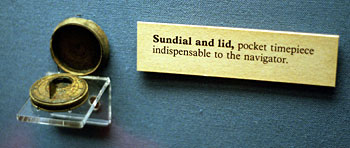
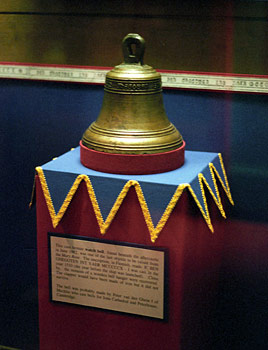
Could a 500 year old map have contained clues to where the wreck of the Mary Rose lay and could this be the first time Portsmouth maps have returned to the city in over 400 years? All these fascinating questions will be raised in a brand new temporary exhibition of international cartographic importance, in the Mary Rose Museum at Portsmouth Historic Dockyard from 2nd July to 17th October 2010. Mapping Portsmouth’s Tudor Past brings together, for the first time, several important maps from The British Library, UK Hydrographic Office and the Admiralty Library. All but one of these maps are hand-drawn and are works of art in their own right. Together they give us a unique and fascinating insight into Tudor Portsmouth and the view of their world 500 years ago. The Mary Rose Trust are delighted that the British Library are loaning 5 unique items for this exhibition including the centrepiece of the display, which will be two stunning large-scale maps of Tudor Portsmouth, one dating from 1545 (the year the Mary Rose sank defending the country from French invasion), which is the earliest scale map of an English town and one of the earliest in Europe, and the other dating from 1552, which was probably made for the visit of Edward VI to Portsmouth on the 9th August 1552. The exhibition also includes two important maps of the Solent from the collection of William Cecil, Elizabeth I Pocket sundial from the Mary Rose. Photo June 2000. As most of you know, tonight is the series finale of Showtime’s The Tudors. Spoiler alert! (Henry VIII dies.) It’s been an interesting four years for Tudor-philes with this series. I know my website traffic, email, blog questions, etc. have increased from people who have been watching the series and want to dig in to the real history behind what they were seeing – and that’s always a plus in my book. (The people wanting to learn history that is, not necessarily the increase in my email volume!) All in all, I’ve enjoyed it, even if I was occasionally frustrated with some of the “creativity” they used with the history (the sisters of Henry VIII being my biggest pet peeve). Now I’m looking forward to the Starz mini-series of The Pillars of the Earth, Showtime’s The Borgias, and going in to some fantasy territory – A Game of Thrones on HBO. Starz also has a series called Camelot in development that sounds like fun. So there is definitely a lot of stuff that will fill the gap the end of The Tudors will leave in my entertainment schedule! Watch bell recovered from the Mary Rose. Photo June 2000. The info card reads:
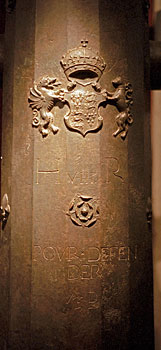
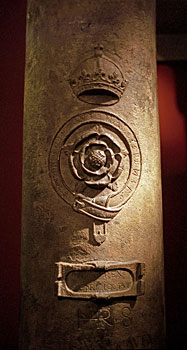
This cast bronze watch bell, found beneath the aftercastle in June 1982, was one of the last objects to be raised from the Mary Rose. The inscription, in Flemish, reads: IC BEN GHEGOTEN INT YAER MCCCCCX – It was cast in the year 1510 (the year before the ship was launched). Close by, the remains of a wooden bell hanger were recovered. The clapper would have been made of iron but it did not survive. The bell was probably made by Peter van den Ghein I of Mechlin who cast bells for Iona Cathedral and Peterhouse, Cambridge. Another cannon from The Mary Rose. Photo June 2000. From “History Today”: A rare medieval prayer roll that once belonged to Henry VIII goes on display, today, in the British Library A cannon from The Mary Rose. Photo June 2000. Update: Here’s a link to an article from the BBC on the statue effort From The Western Telegraph:
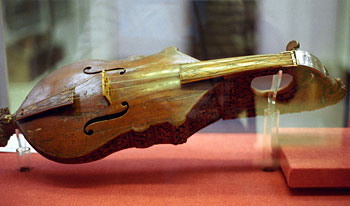
A former Pembroke Castle guide is campaigning to instate a statue of one of the building’s most famous residents in the town. Henry VII, the first Tudor King was born in the castle and lived there until he was 11- years- old. Local resident Mel Phillips is now looking at ways of putting up a statue to commemorate the link. She has won the backing of the manager of the castle and is now exploring ways to fund the project and asking the town Medieval citole in the British Museum, engraved with the arms of Elizabeth I and Robert Dudley, Earl of Leicester. Photo May 1998. To learn more about this item, check out this British Museum webpage. You can also see a better photo, without the reflection of the photographer and her striped shirt… ahem. 🙂 From the Westminster Abbey website: HM The Queen, Visitor of the College of St Peter in Westminster, and HRH The Duke of Edinburgh attended a Service on Friday 21 May 2010 to Celebrate the 450th Anniversary of the Collegiate Foundation of St Peter in Westminster Abbey. The Charter granted by Queen Elizabeth I on 21 May 1560 re-founded the former Benedictine monastery at Westminster as the Collegiate Church of St Peter under the governance of a Dean and Chapter and as a Royal Peculiar, that is not subject to bishop or archbishop but directly answerable to The Sovereign.
The Queen also unveiled a statue of Queen Elizabeth I at Westminster School, which you can see photos of here. Flowers on the marker for Anne Boleyn in the Chapel of St. Peter ad Vincula in the Tower of London. Photo May 19, 1998. From the Lambeth Palace webpage for the exhibition, which opens next Monday: Highlights of the exhibition include: * The MacDurnan Gospels, written and illuminated in Ireland in the 9th century * The Lambeth Bible, masterpiece of Romanesque art * 13th century Lambeth Apocalypse * A Gutenberg Bible printed in 1455, the first great book printed in Western Europe from movable metal type * Books owned and used by King Richard III, King Henry VIII, Queen Katherine of Aragon, Queen Elizabeth I and King Charles I as well as landmark texts in the history of the Church of England * An exceptionally rare edition of the Babylonian Talmud which survived a 1553 Papal Bull ordering all copies to be burnt, which was rediscovered in 1992 * The warrant for the execution of Mary Queen of Scots * Papers of archbishops, bishops and leaders of church and state, ranging from the 13th century to the modern day, including papers relating to the rebuilding of St Paul’s Cathedral after the Great Fire and physicians’ reports on the illness of King George III.
See the webpage for information on times, tickets, etc. And here are a few news site articles on the event: From the Daily Mail – Palace of treasures: Archbishop of Canterbury’s exhibition tells Britain’s story (Some good images on this article) From The Times – Palace unveils historic hoard of a sticky-fingered prelate From The Guardian – Lambeth Palace to exhibit 400 years of religious and royal treasures
Picture of the Week #78
Mary Rose artifact may to travel in to space
Henry 8.0 is back!
Exhibition of Tudor maps at the Mary Rose museum
Picture of the Week #77
The Tudors’ revels now are ended
Picture of the Week #76
Picture of the Week #75
Henry VIII prayer roll goes on display
Picture of the Week #74
Effort to get statue of Henry VII in Pembroke
Picture of the Week #73
Queen Elizabeth II marks Westminster anniversary
Picture of the Week #72
Treasures of Lambeth Palace Library Exhibition

