
Colorful buildings along the road outside the entrance to Pembroke Castle. Photo May 2003.
Colorful buildings along the road outside the entrance to Pembroke Castle. Photo May 2003.

The keep of Dover Castle, built in the reign of Henry II, along with a replica siege engine. Photo May 2003.
Oh boy do I wish I was in London!

From the BBC:
Art historians are one step closer to discovering the identity of a royal painter thanks to scientific research.
Analysis by the National Portrait Gallery of two renowned portraits of Elizabeth I has shown they were painted on wood from the same two trees.
The 16th century paintings have been associated with artist Nicholas Hilliard for many years.
Curator Tarnya Cooper said the research meant the work is probably that of Hilliard or someone working with him.
And more from the National Portrait Gallery website, including a really interesting infrared image of the Phoenix portrait.
Just a couple of stories today:
* Elizabeth Jenkins dies at 104 – Articles from the New York Times and from The Telegraph. Two of Ms. Jenkins’ books were some of the first I picked up when I started to collect them in earnest – “Elizabeth the Great” and “Elizabeth and Leicester”
* Sotheby’s to auction a Shakespeare First Folio and a collection of letters from Elizabeth I, Cecil and more (and not Tudor-related – but really cool – Audubon’s “Birds of America”)
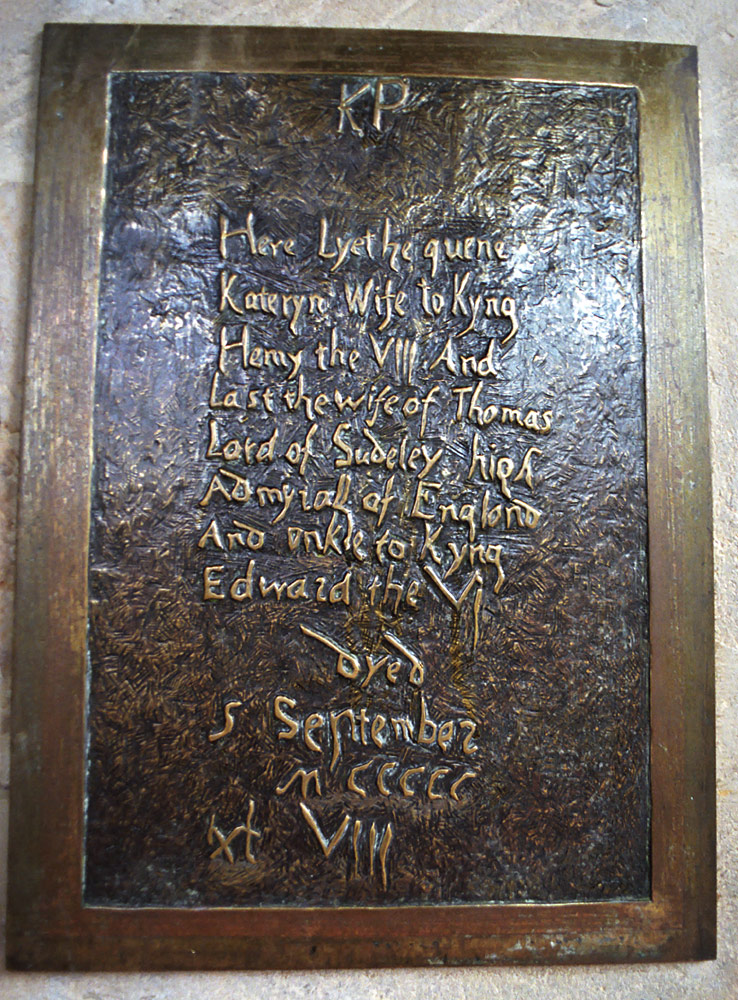
Plaque next to the tomb of Katherine Parr in St. Mary’s Church at Sudeley Castle. Photo May 1998.
The inscription on the plaque was copied from the one on Katherine’s casket.
Since I was off doing my Labor Day cookout on Sunday, I figured I would so my Sunday blogging on Labor Day. 🙂
* Shakespeare’s face recreated for UK HIstory Channel program called “Death Masks”
* Reformation documents go on show – New exhibition from the National Library of Scotland. Additional article here.
* Hilary Mantel’s award-winning “Wolf Hall” is now available in paperback in the US (Amazon links below, of course). Macmillan has a nice page up for the book that includes links to a book club discussion guide, videos and more.

The Old Palace at Hatfield. Photo May 1998.
* 525th anniversary of the Battle of Bosworth event staged on ‘wrong site’ – Be sure to check out the photos of the battle re-enactment
* From the Vaults: ‘Anna Boleyn’ (1920) – A movie blogger’s entertaining review of a 90-year-old Tudor film
* Primary sources related to Elizabeth I, From the Elizabeth Files. This is the type of list that I’ve been wanting to put together but, as with so many things, it’s still on the ‘to do’ list.

A section of Lord Leycester Hospital, Warwick. Photo May 1998.
The Lord Leycester Hospital is named in honor of Robert Dudley, Earl of Leicester, who came in to possession of the old medieval guildhall buildings and chapel (which range from Norman to 14th century). Dudley created the Hospital as a retirement facility for old soldiers and their wives, a function it still serves today.
This is another place on my “to visit again” list since I didn’t actually get a chance to go in to the building when I was there in 1998.
Just a few stories this week:
* Spanish tiles shed light on Tudor palace in Woking
* ‘Tudors’ picks up two Emmy awards
* Queen’s portrait mystery still unraveling – a follow-up to a news item that I posted about a couple of years ago
I really need to start checking my draft posts folder more often! I’ve had this one in there for a couple of months, so my apologies that I’m just now posting about it.

The Boy Who Would Be Shakespeare
IN LONDON IN THE WINTER OF 1795, a 19-year-old apprentice named William-Henry Ireland pretended he
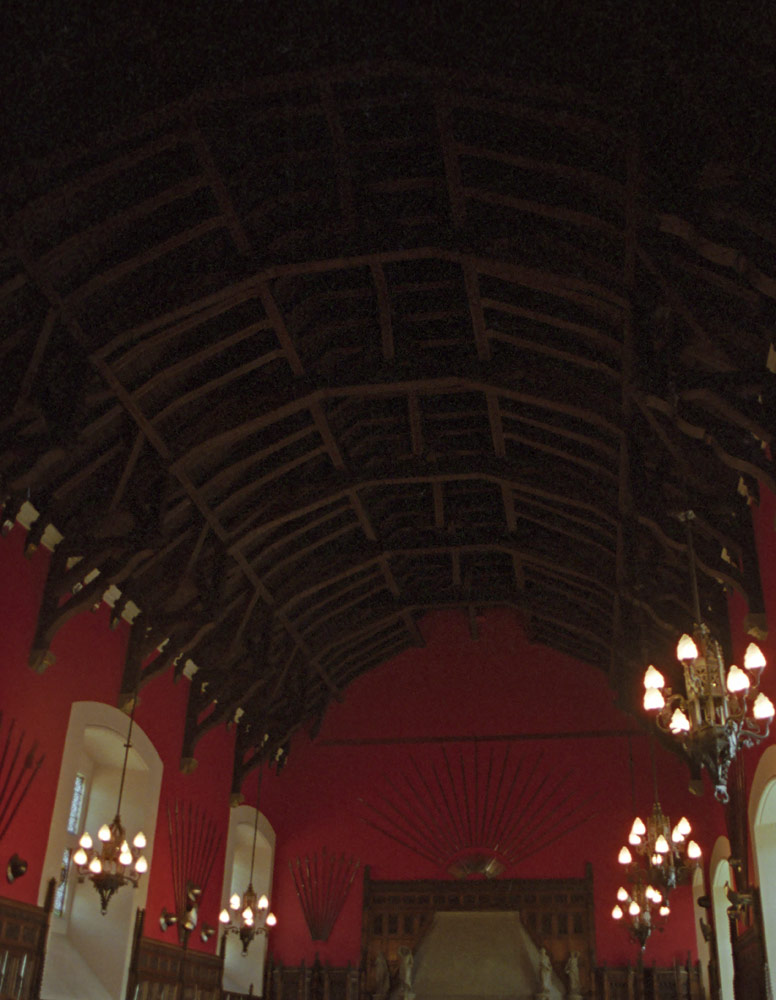
Hammerbeam roof of the Great Hall at Edinburgh Castle. Photo May 2000.
From the BBC:
Archaeologists at the University of Edinburgh are hoping to uncover the scene of a historical unsolved crime.
Work has begun to unearth remnants of buildings which became infamous for the murder of the second husband of Mary Queen of Scots, Lord Darnley.
The remains of the buildings have been buried beneath Old College for more than 200 years.
The dig is being carried out prior to a
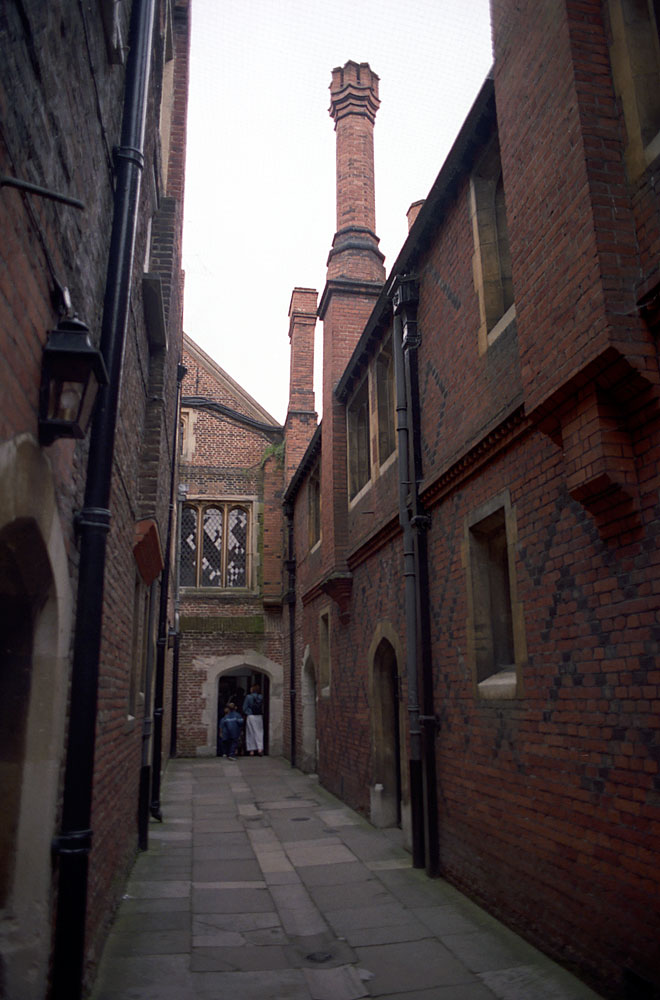
Fish Court, leading to the kitchens at Hampton Court Palace. Photo June 2000.
* Bosworth Battlefield Anniversary Re-enactment at the Bosworth Battlefield Heritage Centre and Country Park on August 21 and 22nd. Also, if you are descended from someone who fought at the Battle of Bosworth, the Centre wants to hear from you! Here’s an article about the search for descendants: Visitor Centre curators in search to locate descendants of men from the Battle of Bosworth, as well as this article with the headline that seems to imply they only want people from Richard III’s side, even though the article explains further: Did your ancestors fight for Richard III?
[Added August 9 – Here’s another article on this that I had to add. Apparently someone at BBC Leicester thinks “ancestor” and “descendant” are interchangeable terms: Search for ancestors of Battle of Bosworth soldiers]
[Updated August 10 – The BBC article has now been corrected.]
* An update on the development plans for Westminster Abbey that I blogged about back in 2009. Unfortunately they will not be going ahead with the plan to add a corona to the Abbey at this time but they will be finishing the new cafe and the plans to open the Triforium (which I’m really looking forward to seeing one day!).
* An interesting article from the Guardian about accuracy in historical fiction: The lying art of historical fiction
* Little Miss Sunnydale has posted a neat Mary I themed tour of London on her Mary Tudor: Renaissance Queen blog
* And finally, Philippa Gregory’s latest novel, The Red Queen came out last week in the US and will be out in a couple of weeks in the UK. It continues her look at the Wars of the Roses, this time from the perspective of Margaret Beaufort. I haven’t read any of Gregory’s books, but I’m tempted to pick this up since Margaret is one of my Tudor interests and I’m curious to see how she fares in the author’s hands, especially since she hasn’t been featured very often in fiction. Standard Amazon links below:
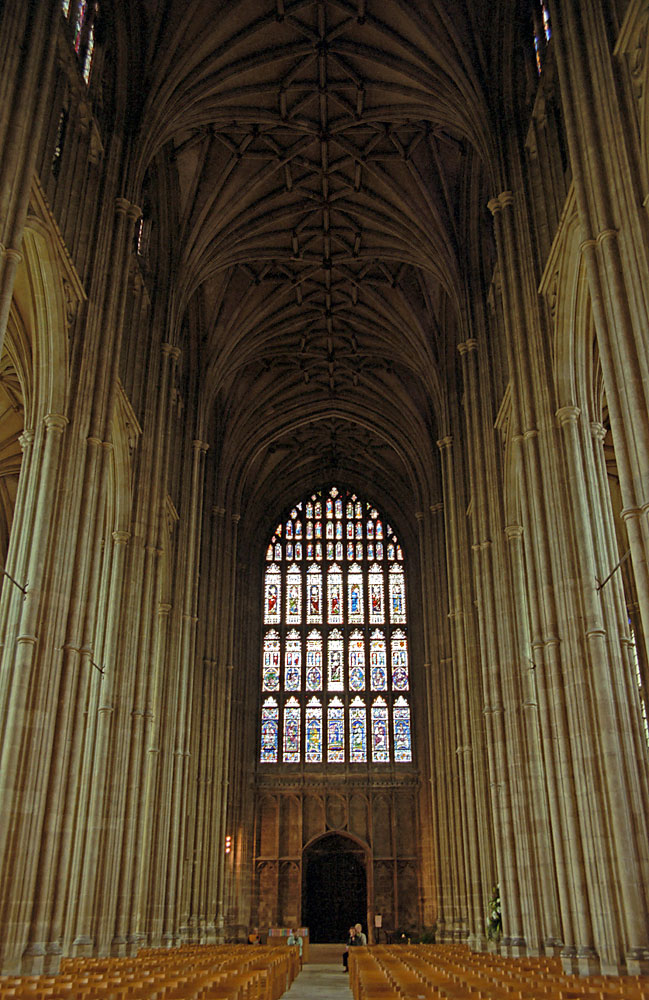
West window of Canterbury Cathedral. Photo May 2003.
If you’re itching to get into reading some primary source documents, this is a good time to stock-up on ebooks from TannerRitchie – downloads are on sale for $10 through August 15. They are also offering a 10% discount on Medieval and Early Modern Sources Online (MEMSO) short-term access subscriptions.
For those not familiar with TannerRitchie, they publish hundreds of rare and out of print historical sources as ebooks and specialize in British History, especially Tudor and Stuart England, British Colonial history (especially in North America and the Carribean), Medieval history and Scottish medieval and early modern history.
You can keep up with sales and new titles through their blog, Twitter and an RSS feed of new publications.
Here are several things that stacked up during my very busy week!
* Turkey presents Ottoman Sultan’s letter to Elizabeth I to UK
* Cash boost to restore Tudor dynasty church on Anglesey (This is the church that I’ve blogged about before here and here.)
* Restoration work at Stirling castle on Youtube – and here’s a link to the YouTube channel for Historic Scotland. The project is restoring parts of the castle to their appearance in the 1540s.
* A new website from the UK National Archives: legislation.gov.uk launched last week.
* Giant maze to open in Trafalgar Square – the hedge maze will be in the Square from August 2 to 6.
* And finally – the fourth and final season of The Tudors will be out on DVD in October in the US (I haven’t heard a UK release date yet, but I’ll update when I find out). Here’s a pre-order link through my Amazon affiliate account for anyone so inclined. 🙂
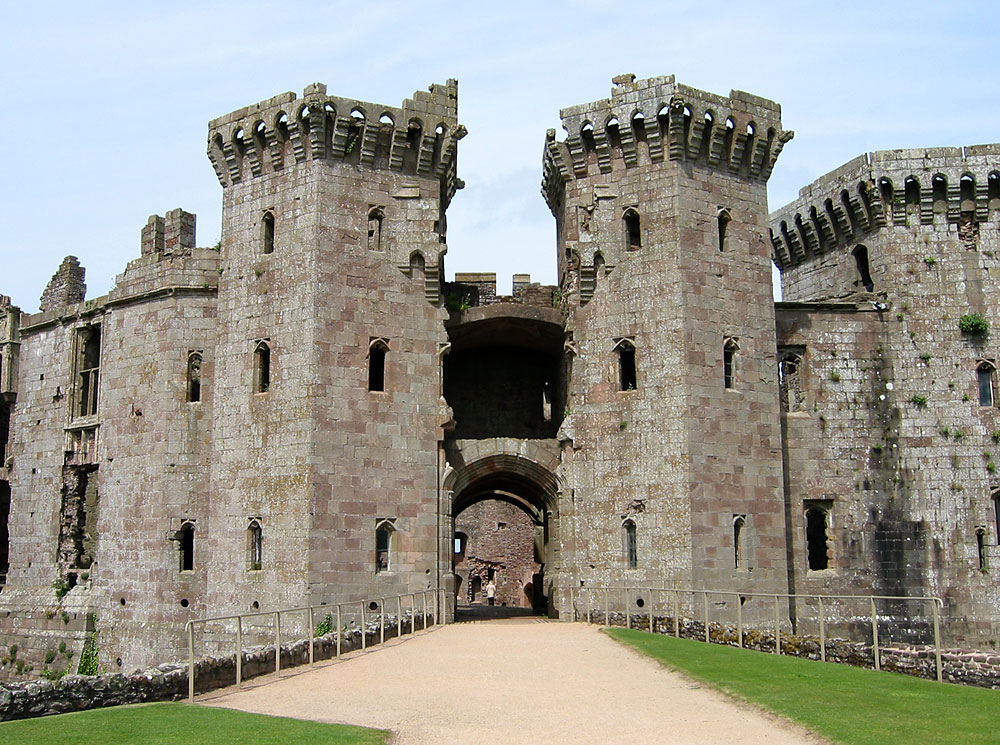
The Great Gatehouse entrance to Raglan Castle. Photo May 2003.
The Great Gatehouse was constructed in the 1460s by Sir William Herbert, while the future Henry VII was living there in Herbert’s custody.
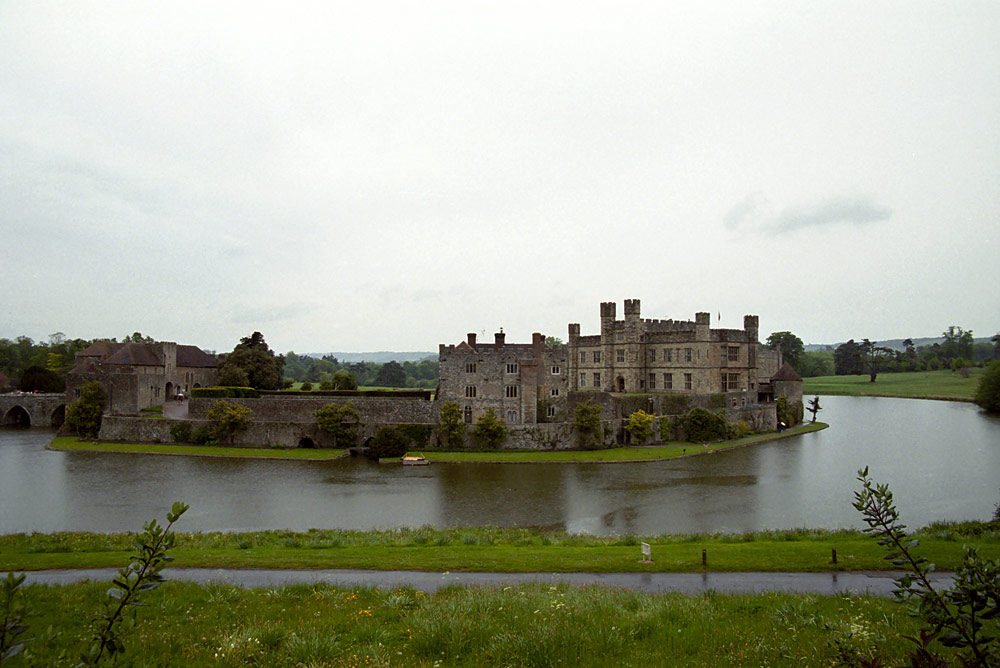
Leeds Castle. Photo May 2003.

