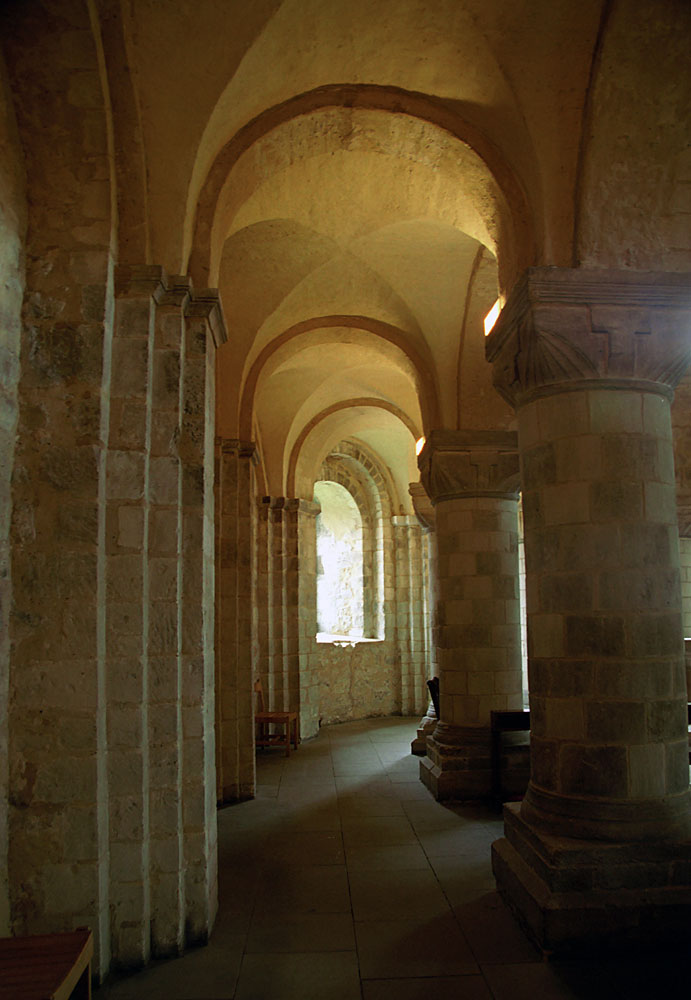
Side aisle of the 11th-century Chapel of St John the Evangelist in the White Tower of The Tower of London. May 2003.
Another photo from one of my favorite parts of the Tower of London.
Side aisle of the 11th-century Chapel of St John the Evangelist in the White Tower of The Tower of London. May 2003.
Another photo from one of my favorite parts of the Tower of London.
I know most of you have probably already seen this through other sites since I’m a little late posting it. (It’s been a rough week packing up my office and lab at work to move before some renovations… the upshot is that I’ll finally get a window office!)

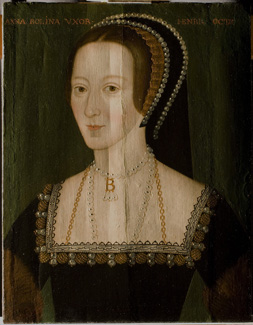
From the National Portrait Gallery:
This important portrait of Anne Boleyn is in urgent need of conservation treatment. It is in a particularly vulnerable and unstable condition as a result of structural problems with the wooden panel. Vertical cracking has occurred across the picture causing minor paint loss where the wood has split (see the photograph taken in raking light alongside). We need to act now as the damage is being caused by the long term effects of an unsuitable cradle (an applied wooden panel support) which must be removed. Therefore this important and much loved painting needs urgent conservation treatment to ensure it can be put back on public display.
The Gallery hopes to raise
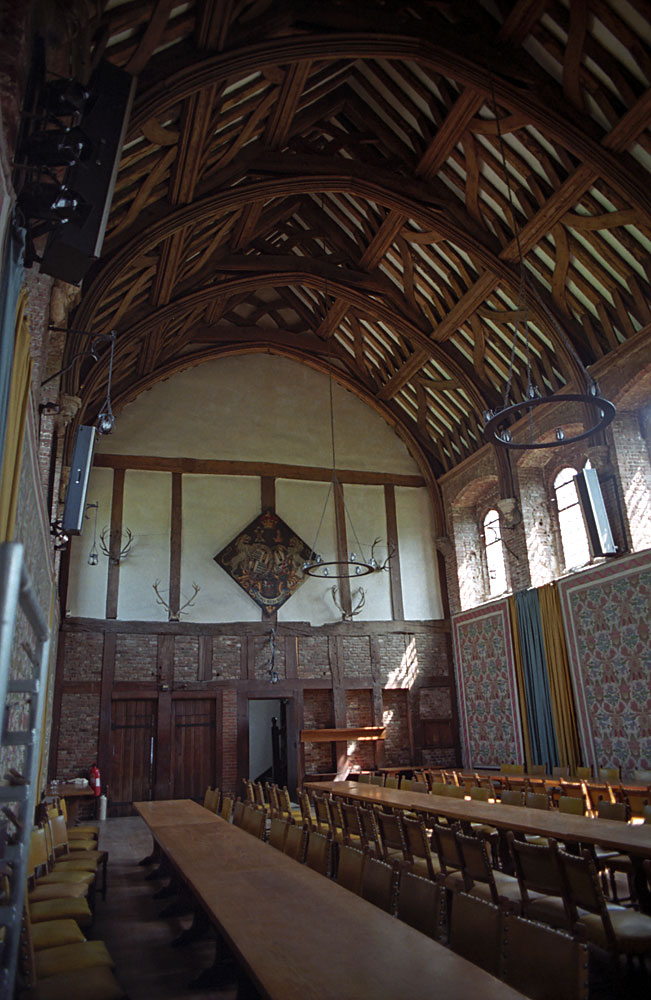
Interior of the Great Hall of the Old Palace of Hatfield House. Photo May 1998.
This is the hall where they do the Renaissance Banquets. At other times there is a little inset bay that is open for you to peek into the Great Hall, which is how I got this picture.
It looks like everything made it over okay, although I still need to make some tweaks. The header temporary until I can work up something a bit fancier.
Just wanted to give everyone a warning that I’m going to be doing some work on this blog today to try to fix some problems “under the hood”. If all goes well, it will be back up in under an hour and everything will be fine, although it will probably look different since I’m going to use that as a chance to upgrade to a more modern theme that will be easier for me to add new features to.
Catch you on the flip side!
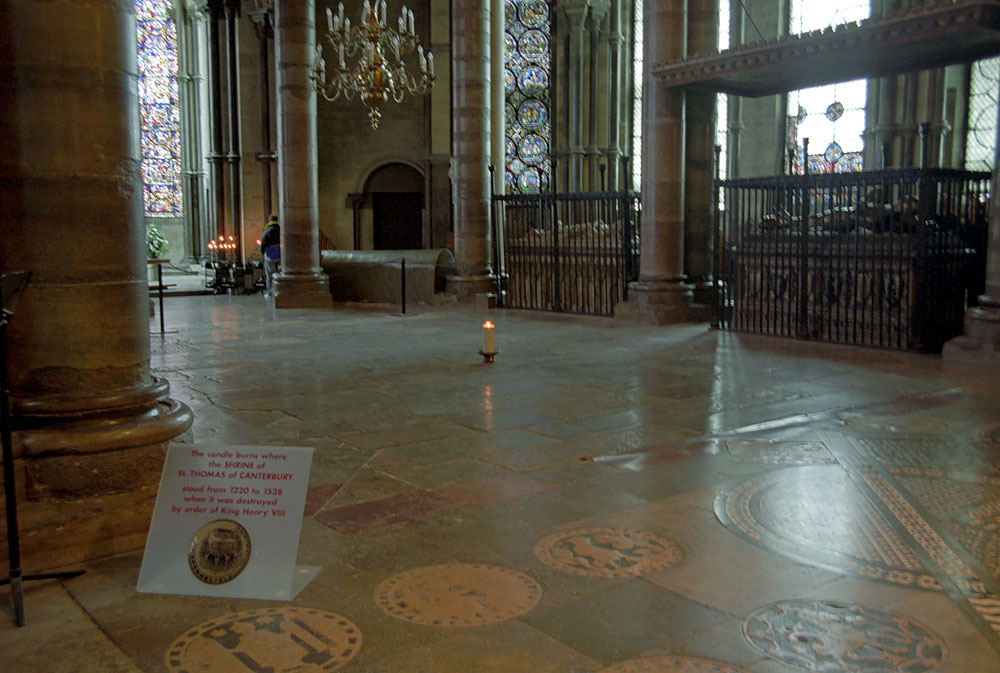
Former place of the Shrine of Thomas Becket in Canterbury Cathedral. Photo May 2003.
This was another one of those times that I had the perfect photo for the day a “Picture of the Week” fell on. The martyrdom of Becket occurred 840 years ago today in 1170 and the Tudor connection is that the shrine was destroyed in 1538 under orders of Henry VIII.
Yeah, I was goofing off and watching DVDs that I received for Christmas and totally forgot to do yesterday’s blog post. 🙂
* A newly built Elizabethan house – an update on a story I first posted about back in November 2007
* The secrets of Parliament’s Victoria Tower uncovered – neat video from the BBC
* The BBC Tudors Collection coming in April – A box set of Shadow of the Tower, The Six Wives of Henry VIII, The Other Boleyn Girl, and Elizabeth R US Amazon pre-order link below for anyone who is interested:
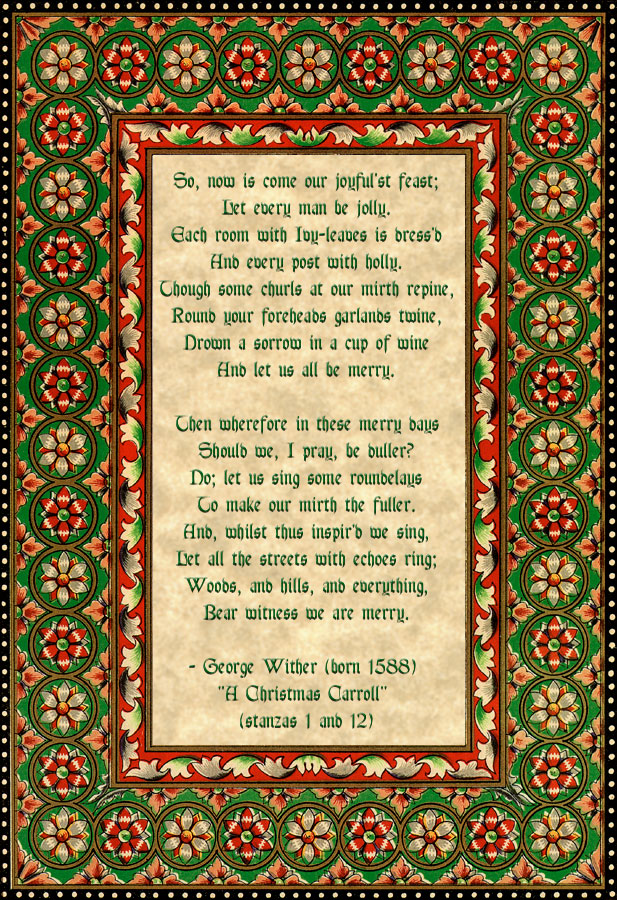
Long-time visitors to the site might remember the Christmas cards that I used to post a link to on the homepage but now blog seems the more appropriate place. I recycled one from about 10 years ago (be thankful that I didn’t post the Tudor family one yet AGAIN), so here it is! Click for a larger version.
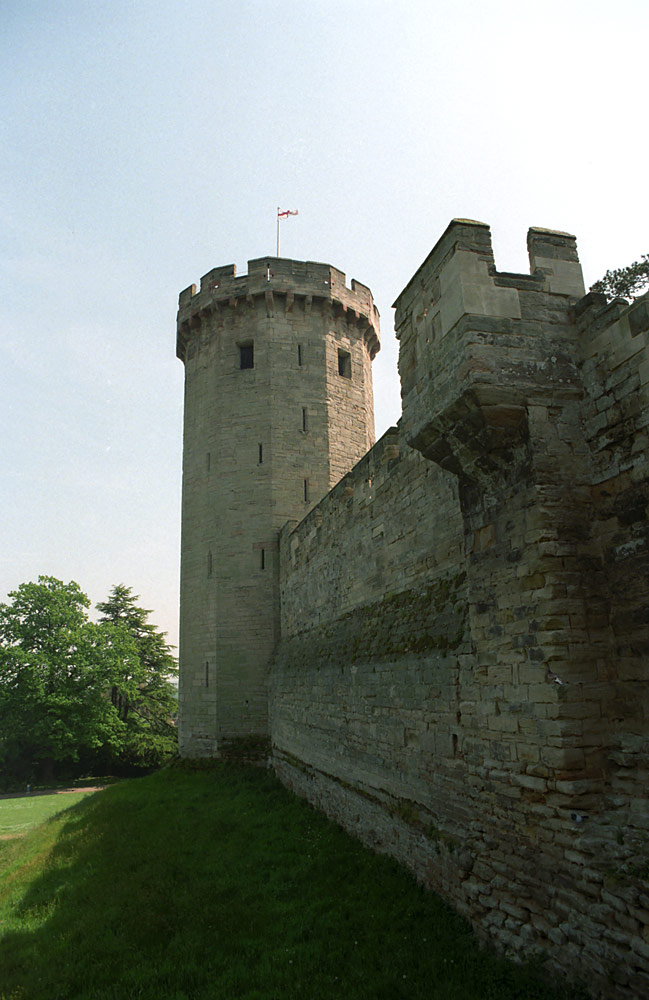
The 14th century Guy’s Tower of Warwick Castle. Photo May 1998.
I’m way late in posting these cooking videos, but I wanted to be sure to get them up before Christmas for the two or three of you who haven’t already seen them. I’m going to just post the links to the YouTube versions because I recommend watching them at a higher resolution if you have the bandwidth!
From The Historic Royal Palaces Official YouTube page:
* Ryschewys close and fryez: Tudor cook-along video
* Fylettys en Galentyne: Tudor cook-along video
* Tartes owt of Lente: Tudor cook-along video
And if you have an iPhone and happen to be visiting the Tower of London, you can play “Escape from the Tower of London”, which looks like it could be a lot of fun.

Arms of Catherine of Aragon at Carew Castle in Wales. Photo May 2003.
This is a close-up of Catherine’s arms that are visible in the wider shot that I had way back as Picture of the Week #8. Her arms are a combination of those of Aragon (upper right and lower left) and Castile (upper left and lower right), as seen below (image adapted from a file at Wikimedia Commons):

A lot of you know that I get a big kick out of being able to link to articles on Scientific American here at a history blog. 🙂
From SciAm:
The severed head of King Henri IV has been identified from the jumbled remains in the mass graves in Paris’s Royal Basilica of Saint-Denis. A team of researchers used a host of scientific strategies to confirm the head’s owner, who was killed in 1610.
…
Henri IV was embalmed and then interred at the Basilica of Saint-Denis. But his – along with other royal graves there – was destroyed during the 1793 revolution. The remains were mutilated and mixed together in mass graves.
…
[…] although there were traces of hair left on the head and face, the researchers lacked adequate mDNA material to run a genetic test. So they turned to other methods to confirm the regal provenance of the cranium, including the following:* Radiocarbon dating provided a 200-year window (1450 to 1650), which matched with Henri’s lifespan (1553 to 1610).
* Computed tomography (CT) scans of the head matched up nicely with details in a mould that was made just after the king’s death (now at the Saint-Genevieve Library in Paris).
* Raman spectroscopy showed traces of an amorphous carbon known as ivory black, which was used by the physician Pierre Pigray during the embalming process (specifically requested by the king to be “in the style of the Italians” rather than conforming to more typical French burial preparations). “This charcoal, obtained by anaerobic calcinations of animal bones, corresponds to that deposited by the surgeon Pigray on the surface of the cadaver to absorb decomposition fluids and putrefactive gases,” the researchers noted.
For context, Henri IV was King of France from 1589-1610 and King of Navarre from 1572-1610, contemporaneous with the last part of Elizabeth I’s reign.
You can see the research article at the British Journal of Medicine here, including imagery of the head.
It’s $10 downloads this year! Check out their titles, including many great Tudor-era primary sources, at TannerRitchie.com

Remains of an arrow loop in a crumbled wall at Raglan Castle. Photo May 2003.
Just a couple of quick updates to two news articles on auctions that I posted over the past few months:
The big Sotheby’s auction of items (mentioned here) brought in

Carvings under the Anne Boleyn Gatehouse at Hampton Court Palace. Photo June 2000.
Wow, I’ve hit 100 Pictures of the Week!
If I remember correctly, these carvings are Victorian. The figures are an entwined “H&A” and “A&H”, the portcullis (a Beaufort symbol), Anne Boleyn’s falcon badge, the fleur-de-lis and in the center, an intricate Tudor rose.
Some of these are a little stale since I should have posted them last Sunday…
* Bust previews Thomas Wolsey statue in Ipswich
* Medical imaging used to probe Tower of London mural
* Royal bed’s Rhyl hotel fireplace link
* Phone box to commemorate Battle of Flodden
Choice quote: “We will bash on, even if we end up with the world

Image from The Royal Mint
From Portsmouth.co.uk:
THE MARY Rose has been chosen to feature on a set of commemorative coins for 2011.
The historic ship, housed at Portsmouth’s dockyard, is one of six coins that will be in circulation from next year and has been produced by the Royal Mint.
The Mary Rose, which was King Henry VIII’s flagship, has been chosen as next year marks the 500th anniversary of the great ship’s maiden voyage.
The image has been done by designer John Bergdahl and around the edge of the coin, a Latin inscription reads ‘your noblest shippe 1511’.
You can get a collectible version with an information folder from The Royal Mint here. I’ll be getting one to go with my Henry VIII 500th and Elizabeth I 450th accession anniversary special coins. 🙂
And…

Press release image from The Mary Rose 500 Appeal
Unfortunately this particular collectible is a little out of my price range…
Press release from The Mary Rose 500 Appeal:
Alan Titchmarsh Pledges Support to New Mary Rose Museum Campaign
Broadcaster and author Alan Titchmarsh is putting his weight behind the campaign to build a spectacular new

Side of Hever Castle. Photo May 1998.


