Yes, once again I’ve gone through all of last year’s emails for the Q&A Blog (including both the posted questions and ones I answered directly) and have looked for trends and themes.
The overall number of questions was down from last year – 250 for 2010 compared to 465 in 2009. Some of this may have had to do with “The Tudors” ending its run in the US in the first half of the year and the 4th season not airing in the UK until 2011. It also could be that more people are searching through the archives and finding that their questions had already been answered.
So, the data:
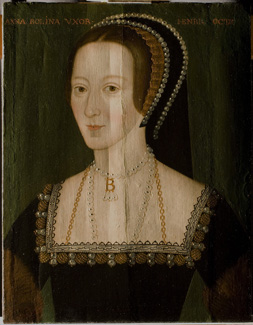
– Anne Boleyn and her family still lead the pack for the people who have been asked about the most. I think some of the topics of interest in Anne and her family have changed somewhat and in the case of Anne, more were about her life than her death. Although her death and burial was definitely still a topic of interest! And her daughter, Elizabeth I, is probably the most asked about of the monarchs.
– I think Catherine of Aragon came in a close second for number of questions. I’m not sure if that is up from previous years, but if it is, it might be due in part to the new biography of her by Giles Tremlett. The rest of the wives were asked about as well, of course, but not as much as #1 and #2. (I think Anne of Cleves would rank third in questions about the wives.)
– There seemed to be an increase in people looking for primary sources, which is a great thing. And there were still quite a few people trying to find out the truth behind some of the fictional portrayals of the Tudors (the TV series, movies and novels all included), as well as looking for recommendations of accurate non-fiction books and verification of quotes. I would also group into this section people looking for information for novels (authenticity of names and name choices cropped up a fair amount), as well as ideas for dissertations and school projects.
– There is still a sustained interest in illegitimate children of Henry VIII (and at least one question about children of Elizabeth I, as well as bastards of queens in general)
– Some of the pre-Henry VIII Tudors have gotten some attention lately, which pleases me since some of my interests fall in that area. There were a few questions about Margaret Beaufort, although I had expected more with Philippa Gregory’s new novel about her.
– Outside of the Kings and Queens, Thomas Cromwell seems to be leading in questions, probably due to “Wolf Hall” and “The Tudors”. Charles Brandon cropped up a few times as well (in part, I’m sure, because of his portrayal by the hunky Henry Cavill on “The Tudors”). Thomas Wolsey got a few questions too.
– Executions were still a popular topic, in terms of customs, techniques and treatment of remains.
– Medicine, health and daily life (hygiene and cleanliness in particular) cropped up a fair amount as well.
– Places to visit and information on the layouts of great houses, castles and palaces were popular last year.
– In a broad sense, there were a number of questions about the nobility, ladies in waiting, royal and noble households and forms of address. I think that some of these, as well as the questions about the layouts of palaces, were for people writing novels, but the questions weren’t always explicitly stated as such.
– And finally, I have to mention what is probably the single most-asked question since I’ve started running the site – “What happened to Mary Seymour, daughter of Katherine Parr?”. For a child who probably died very young she has garnered a lot of interest and I love the fact that we’re still wondering about her over 450 years after her birth.
Previous round-ups:
http://tudorhistory.org/blog/2009/01/08/frequently-asked-questions/
http://tudorhistory.org/blog/2010/01/18/frequently-asked-questions-2009-edition/