Picture of the Week #132

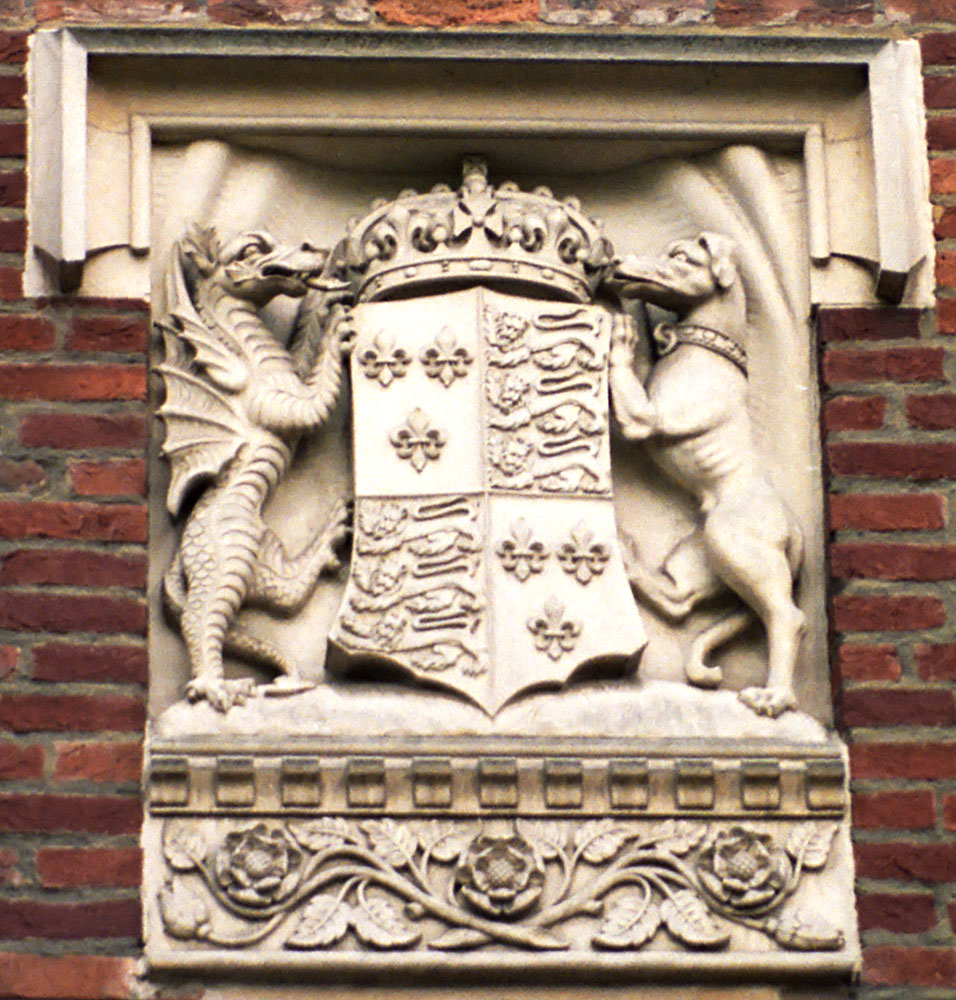
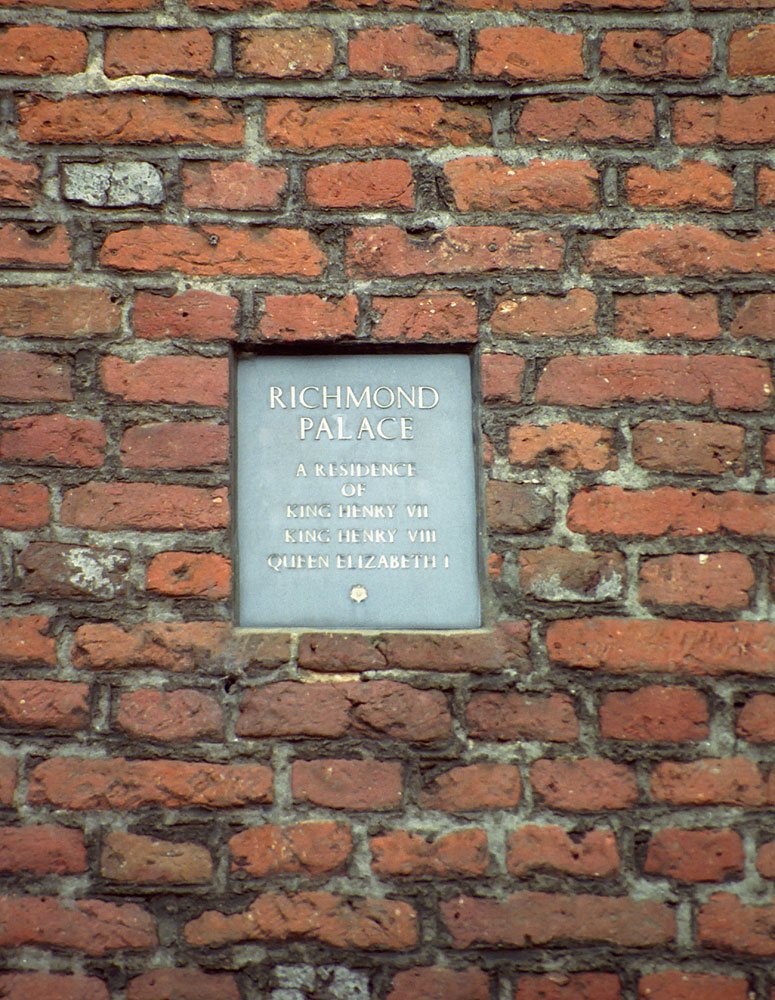
Tudor royal arms from the gatehouse section of the remains of Richmond Palace. Photo May 2000.

The supporters – the dragon and the greyhound – were those used by Henry VII, who is responsible for building Richmond Palace after the older medieval palace of Sheen burned in 1497.

Sunday Short Takes

* I’m sure most of you have already heard about this but the National Portrait Gallery announced last week that the funding goal for the preservation work on the Anne Boleyn portrait has been reached! They will update that page periodically with progress reports. (My original post about the needed work can be found here.)

* Vatican’s Secret Archives on display in Rome exhibition – From the article: “An appeal by the English Parliament asking the Pope to annul Henry VIII’s marriage to Catherine of Aragon will be among 100 priceless documents from the Vatican’s Secret Archives to go on display in an unprecedented exhibition in Rome.”

* Cardinal Thomas Wolsey statue unveiled in Ipswich – Pictures from the unveiling of the statue project that I’ve linked to in the past

* King Henry VIII Gets a New Coat – The Henry VIII statue at the Mary Rose Museum (my Picture of the Week #122) got a bit of a spruce up earlier this year and is now back in place

Blog header rotation time!

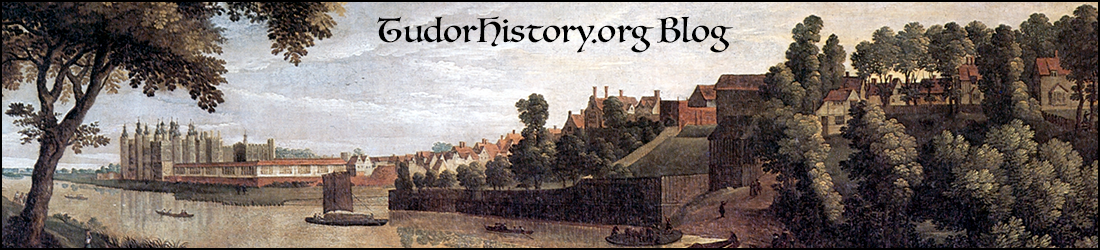
When I debuted the new blog header a few months ago I mentioned that I had put four together initially and would change them periodically. So I thought while I was off for a four-day-weekend I would switch it out to a new one. This new one is a slice from a painting of Richmond Palace and the Thames from the early 17th century by an unknown artist. It is currently in The Fitzwilliam Museum at The University of Cambridge.

Sunday Short Takes

* Alas poor William, I knew him: Scientists in bid to dig up the grave of Shakespeare to work out how he died

* New Battle of Bosworth trail reveals the true location of the historic English battlefield

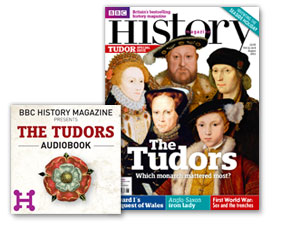
* BBC History Magazine’s August 2011 Tudor Special

* BBC – Your Paintings – From the “About” page: Your Paintings is a website which aims to show the entire UK national collection of oil paintings, the stories behind the paintings, and where to see them for real. It is made up of paintings from thousands of museums and other public institutions around the country.

Picture of the Week #129

Stained glass of John Knox at the John Knox House in Edinburgh, Scotland. Photo May 2000.

Although the place is known as “John Knox House”, he probably never even visited the house. It is a late-15th century mansion along the Royal Mile in Edinburgh and in the 16th century it was owned by goldsmiths who refashioned the Scottish crown for James V. Sadly, I didn’t take any other photos inside the house since it was pretty dark and I was shooting on film (I can’t wait to get back to a bunch of these places now that I use a DSLR!), but some of the interiors are amazing. I have a thing for uneven wood plank floors and wood-panelled rooms and it was full of them!

The Anne Boleyn Files 2012 Tudor Places Calendar is Launched!

Some of you may recall the calendar photo contest by The Anne Boleyn Files from earlier this year (my brief mention of it was here) and now the winners and calendar have been revealed! The image that won and graces the cover (above) is stunning. I especially love it since it is the polar opposite of all my photos from a rainy, gray day at Leeds Castle.

The calendar includes photos of the places listed below and the births and deaths of the Tudor kings and queens, plus the dates of important battles during the Tudor period.

Lord Leycester’s Hospital, Warwick, Warwickshire
Blickling Hall, Aylsham, Norfolk
Old Palace, Hatfield, Hertfordshire
Ludlow Castle, Ludlow, Shropshire
Hever Castle, Hever, Kent
Hampton Court Palace, Richmond, London
Haughmond Abbey, Shrewsbury, Shropshire
Sudeley Castle, Winchcombe, Gloucestershire
Leeds Castle, Maidstone, Kent
Glastonbury Abbey, Glastonbury, Somerset
Coughton Court, Coughton, Warwickshire
Pembroke Castle, Pembroke, Pembrokeshire

Also, $1.50/

History Today article on Mary Seymour

I’m sure most of you have seen this already since half the Tudor blogosphere beat me to it (bad combination of my time zone and a busy morning at work), but the Mary Seymour article that I mentioned in the Sunday Short Takes a couple of days ago has now been posted at the History Today website. I was so pleased that this turned out to be one of the articles that they posted the full text of so everyone would get a chance to read it!

What became of the baby daughter of Henry VIII’s widow Katherine Parr and her disgraced fourth husband Thomas Seymour after their deaths? Linda Porter unravels a Tudor mystery.

On August 30th, 1548 Katherine Parr, widow of Henry VIII and then wife of Thomas Seymour, Lord Sudeley, gave birth to a daughter at her fourth husband

Sunday Short Takes

* Tombs in Suffolk studied with aid of space-age science and Here come the Tudors… in 3D – In a follow-up to a story that I had in some news round-ups back in December 2010 and January 2011, researchers have revealed results of their laser scanning of the tombs of Henry Fitzroy and Thomas Howard.

* In the July Issue of History Today – A small but intriguing mention of an article in the upcoming issue about the fate of Katherine Parr’s daughter. What happened to Mary Seymour is in the top 5 of the most frequently asked Tudor history questions I’ve seen.

* Stirling Castle – A Glimpse of Magnificence – I know you’re all probably sick of me linking to things about the Stirling Castle renovations, but as you’ve probably guessed, I’ve found the whole project quite interesting. Here’s a video overview of the project now that it is open to the public.

Of arrows, maypoles and… bears

After musing about maypole-induced deaths in the article I linked to on Sunday, I found out through this article from the BBC that the truth was even stranger than I had imagined:

Maypole injuries were not only caused by careering into another country dancer. Thomas Alsopp of Coventry was standing in the former cemetery of the Coventry Greyfriars under a stone wall on 26 April 1558 when a maypole fell over.

It hit the city wall and knocked a stone out of the top of it, which hit him on the left part of his head and penetrated his brain, killing him instantly.

And the bears I alluded to in the title:

Bears were part of the Tudor entertainment scene. There were performing bears and there were bears kept for the bloodthirsty attraction of bear-baiting. […] But sometimes they escaped. A widow called Agnes Rapte was killed by Lord Bergavenny’s bear when it broke loose at his house at Birling, Kent in 1563. Another victim, Agnes Owen from Herefordshire, was killed in her bed by a runaway bear.

Read the full article for more stories of bizarre Tudor-era deaths.

Sunday Short Takes

* Tudor coroners’ records give clue to ‘real Ophelia’ for Shakespeare – I saw a lot of articles going around last week on this discovery by Dr. Steven Gunn, but I liked the discussion in this one of safety in the period in general. I’m particularly intrigued by the fatal maypole accidents…

* Mary Arden’s Farm blog – If you’re interested in Tudor and Elizabethan daily life topics, check out this new blog from the Shakespeare Birthplace Trust

* English Heritage Free Sites Audio Tours – English Heritage has put up mp3 versions of audio tours for their free sites that you can download. Be sure to check out some of the other goodies in their multimedia library!

* Damon Albarn and the Elizabethan magical mystery man and The Mystical Artefacts Of John Dee At The British Museum – I don’t get a whole lot of hits on my “John Dee” news alert, so it was particularly surprising to get two in one week (even though they are related, prompted by a new opera)

* Gunpowder Plot documents among millions of papers put online by National Archives and Fourth and final part of State Papers Online – I’ve linked to related stories on this topic in the past and it’s nice to see that it is finally complete. Unfortunately there still doesn’t appear to be a way for individuals to access it without an institutional affiliation (which I’m lucky to have through work!).

* And finally, Mullions XP – Operating System For The Tudor Times, a fun video sent to me by Stephanie through twitter. Enjoy!

Sunday Short Takes

Yes, the Sunday news round-up is back! Sorry it’s been quiet around here, I’ve been working on a few projects and taking some time off but now I should be back on a regular schedule until I take some more time off in August.

* I’ve mentioned this project many times over the past few years, and now the restored royal apartmetns at Stirling Castle are open! The video in the link to the STV story has some neat views and a snippet of the weavers still working on the reproduction tapestries for the castle. STV – Stirling Castle apartments reopen after makeover (with video) and BBC – Doors open after

Piece of The Mary Rose onboard Space Shuttle Endeavour

I kept putting off posting this story until the shuttle actually launched and after several delays it finally has!

I first heard about the possibility of a piece of The Mary Rose flying on the space shuttle when the crew of a different shuttle flight visited the Historic Portsmouth Dockyard last summer. They took the artifact with the hope that it would be flown on a future flight, which is indeed what happened. Here are some of the article links I collected about it, back when Endeavour was originally supposed to launch back in April:

From nasa.gov: Robonaut Hand, Ship Bearing Head to Space

From The Telegraph: Mary Rose artefact to be sent into space on Endeavour

From The BBC: Mary Rose artefact on space shuttle Endeavour

Royal School of Needlework and the Royal Wedding Dress

I posted a neat news video a few weeks ago on the Sunday Short Takes about the Royal School of Needlework and they got a lot more attention recently when it was revealed that they worked on Catherine Middleton’s wedding dress. There is a press release at the RSN website with some of the details of their work.

I know my fellow needleworkers would like some more details and up close pictures, but they seem to be hard to come by! At least there are plans for the dress to go on public display. So here are some links I collected, including some pictures and interviews with the embroiderers who worked on the dress.

Royal wedding: Dress embroiderers were kept in the dark

Revealed: Kate’s ‘secret meetings’ with dress designer in Henry VIII’s favourite palace

Royal wedding: the team of women who worked in secret to create Kate Middleton’s dress and Related images

Update: The announcement has now been made about the dress going on display this summer at Buckingham Palace. You can read more at the Royal Collection website.