Part II of the State Papers Online launches

I blogged about the first part of the papers going online back in November. Libraries (particularly at universities) might have subscriptions where you can access the content. They still haven’t set up a method for individual subscriptions, but if you think you might be interested in one, please send an email to their contact listed on http://gale.cengage.co.uk/statepapers/

Here is the press release:

Jul 10, 2009

Picture of the Week #26

Harlech Castle, North Wales. May 2000.

This one is only tangentially related to Tudor history, but I wanted to use another picture of a cool Welsh castle. Harlech castle is one of the ring of fortresses around north Wales built in the late 13th century by King Edward I of England. In the 15th century is was a stronghold of the Lancastrian forces during the Wars of the Roses.

Short delay

Once again the fates have conspired against me and I don’t have the podcast finished yet. I may be able to get it posted before the end of the month (in two days!), but it might not be posted until next weekend.

[Comments are closed on older posts. If you wish to make a comment, please contact Lara via the link in the sidebar.]

Just one more post today

Sorry for the flurry of posts today (and I still have a few more draft posts that I’ll save for tomorrow). As usual, I feel behind during the week, and of course this was a BIG week in Tudor history with the 500th anniversary of Henry VIII and Catherine of Aragon’s coronation on Wednesday and Henry VIII’s birthday today.

I’ve created a Twitter account for Tudor stuff, as opposed to my personal Twitter account where I mostly post science and personal stuff. The address for the Tudor feed is http://twitter.com/tudorhistory. Right now I’ve mostly been posting links when I’ve updated the blog (although I’ll refrain from posting a link to this post, since I’m pretty sure the feedback loop from that will create a hole in the space-time continuum). I’m also going to do an occasional “Today in Tudor History” once I get organized.

And for those of you eagerly awaiting the next podcast episode (I *think* there are at least one or two of you!), it’s going to be a little late. There is an outside chance I’ll have it finished before the end of the month, but if not, look for it next weekend.

That’s the update from hot and steamy Texas! Hey, it’s expected to only reach 100F (37.7 C) for most of next week, as opposed to the 105F+ (40.5 C) temps we had all last week! And it’s only June…. it’s going to be a LONG summer…

What would have happened if Henry VIII had obtained his divorce?

From The Independent:

The Big Question: What would have happened if Henry VIII had obtained his divorce?
By Paul Vallely

Why are we asking this now?

Because the Vatican has just announced that it will market 200 facsimile copies of the elaborately decorated parchment from 1530, which bore an appeal by English peers to Pope Clement VII asking for the annulment of the marriage of Henry VIII to Catherine of Aragon.

The document is key, historians said, to understanding the formation of the English national character. It marks, said Professor David Starkey in Rome yesterday, the most important event in English history. “This is the moment at which England ceases to be a normal European Catholic country and goes off on this strange path,” he said, “that leads it to the Atlantic, to the New World, to Protestantism, to Euro-scepticism.”

How would things have been different if England had remained Catholic?

“My offices might be in Rome and I might be writing in Latin,” quipped Paul Handley, the editor of the Church Times, the leading Anglican newspaper, yesterday. “And what would have happened to the bolshy individualistic Englishman on which we base all our historical mythology?”

It would have been a unique Catholicism though, not fervent like the Mediterranean kind, but not separatist like the Catholism of France which is the product of a guillotine-crazed Revolution and a secularising Enlightenment. We might just be irreligious Catholics instead of irreligious Protestants. But the world may have lost something rather special.

Full article

Picture of the Week #25

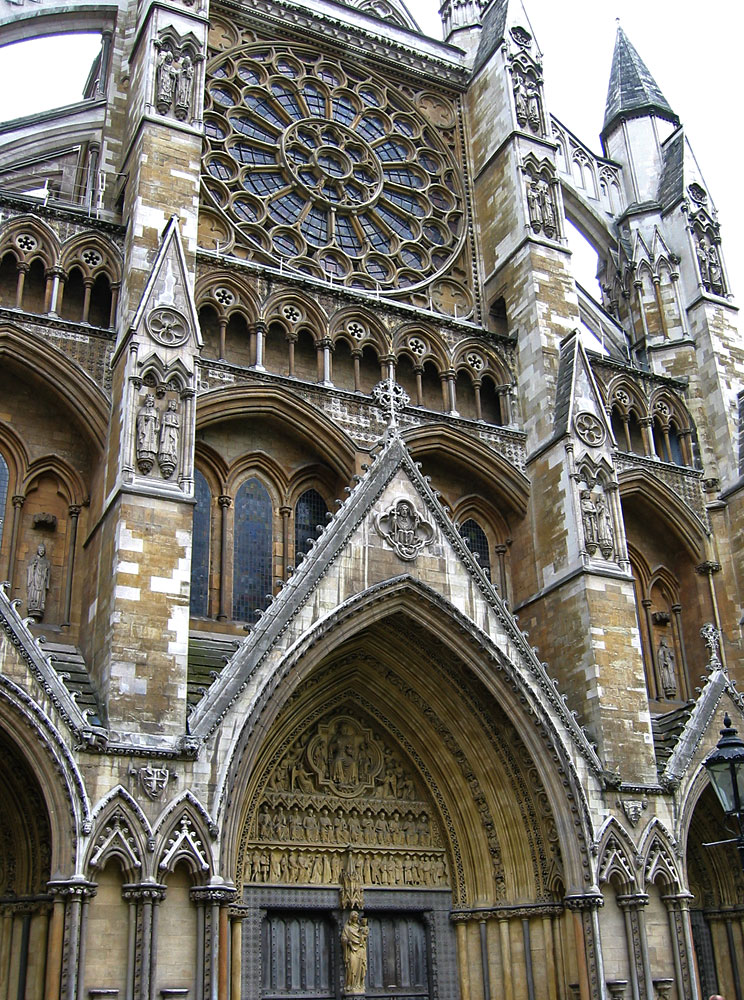
North front of Westminster Abbey. May 2003

In honor of the 500th anniversary of the coronation of Henry VIII and Catherine of Aragon, I’m posting a photo of Westminster Abbey, where they were crowned. More on the anniversary in another post!

Catching up!

Sorry for the slow posting on this blog for the last week or so. Things have been busy, as you might have guessed!

* The celebrations that I blogged about back in February took place this weekend. Here is an article with some photos and I’ve embedded a You Tube video of the pageant passing Blackfriars Pier:

* Just a reminder that the Royal Mint has some special commemorative coins out this year for the Henry 500 celebrations. I posted about them back in December, but here is the link to the page on the Royal Mint website. (I have several of their less-expensive collectible coins, including the one for Henry, so if you’re in to those kinds of things I’d recommend them.)

* BBC 4 is showing the program Henry VIII: Patron or Plunderer? with Jonathan Foyle about cultural artifacts from the reign of Henry VIII.

* And finally (thanks to Kathy for sending this one in!) The Forme of Cury, a medieval cookbook, has been digitized and put online by the John Rylands Library in Manchester. Here is the BBC article and here is a link to the Rylands Medieval Collection at the library.

Picture of the Week #24

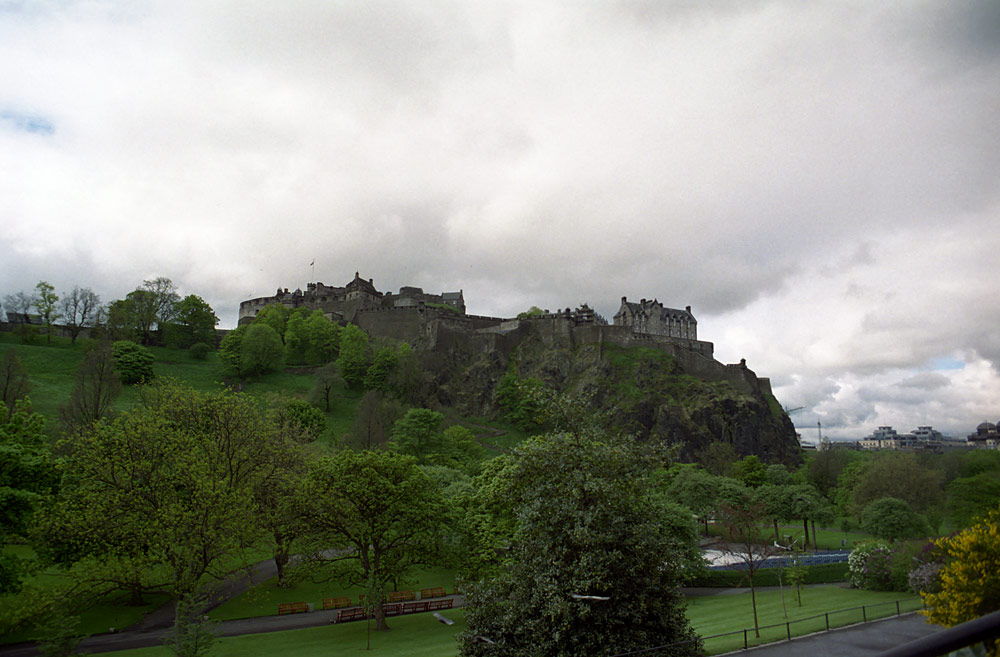
Edinburgh Castle, Scotland. Photo May 2000.

North of the border this week, for something a little different. The temperature in Edinburgh is about half that of Texas today (in Fahrenheit) which has me dreaming of being in more comfortable climes.

Acton Court opens to the public

From The Gazette:

A TUDOR house where Henry VIII once stayed has opened to the public for the summer season.

Acton Court, in Iron Acton, is open for 60 days until August 23 for guided tours and a programme of special events.

Lisa Kopper, resident artist and manager of the house, said: “We are open every day except Monday and when special events are planned so people can just turn up for tours or call us to make sure.”

The house offers rare examples of 16th century royal d

Picture of the Week #23


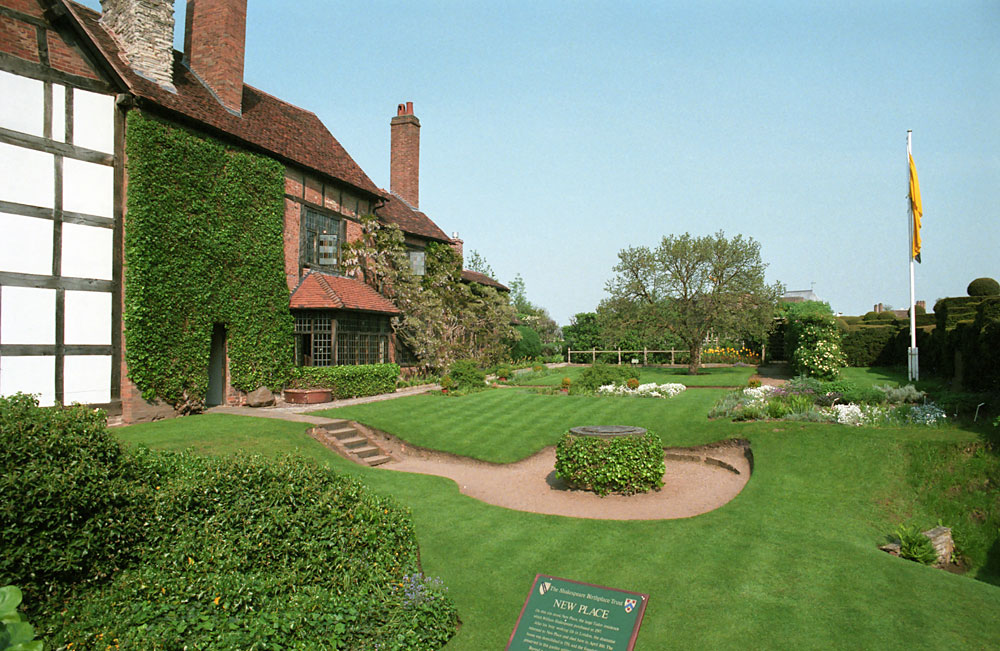
New Place, Stratford-upon-Avon. Photo May 1998.

New Place was the house that William Shakespeare lived in after he retired and moved back to Stratford and is where he died. Unfortunately the building itself no longer exists. The building on the left is Nash’s House, named after Thomas Nash, first husband of Shakespeare’s granddaughter. Both properties are part of the Shakespeare Birthplace Trust.

Skyview: The Tudor Age

Thanks to Stephan for telling me about this!

If you have the Smithsonian Channel, they have an episode of their program “Skyview” called “The Tudor Age” with some stunning aerial imagery. I unfortunately don’t have an HDTV (yet), so I haven’t been able to watch the program (my cable company only has the HD version), but there are some clips on their website. I’ve embedded one below, but you can head over to the page for that episode to see more. A DVD of the show will be available in July.

If you’re a castle junkie like me, be sure to check out some of the other related videos!