In a follow-up to this post from last month, the reproduction of Henry VIII’s annulment request has been unveiled (seals and all):
From the BBC:
In a follow-up to this post from last month, the reproduction of Henry VIII’s annulment request has been unveiled (seals and all):
From the BBC:
Great news!
From the BBC:
Final conservation work on Henry VIII’s warship, the Mary Rose, is to go ahead, along with a new museum for the vessel, after a
This was posted to my Yahoo group. Loved it!
And I *think* I recognized the website on the computer in the video… 🙂
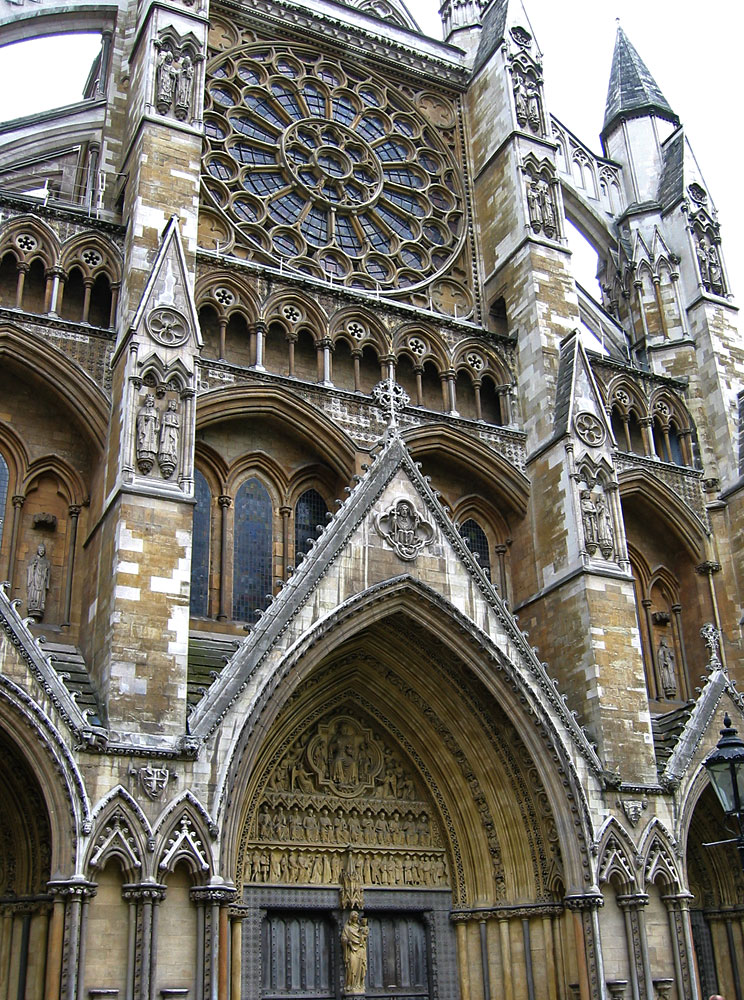
North front of Westminster Abbey. May 2003
In honor of the 500th anniversary of the coronation of Henry VIII and Catherine of Aragon, I’m posting a photo of Westminster Abbey, where they were crowned. More on the anniversary in another post!
Sorry for the slow posting on this blog for the last week or so. Things have been busy, as you might have guessed!
* The celebrations that I blogged about back in February took place this weekend. Here is an article with some photos and I’ve embedded a You Tube video of the pageant passing Blackfriars Pier:
* Just a reminder that the Royal Mint has some special commemorative coins out this year for the Henry 500 celebrations. I posted about them back in December, but here is the link to the page on the Royal Mint website. (I have several of their less-expensive collectible coins, including the one for Henry, so if you’re in to those kinds of things I’d recommend them.)
* BBC 4 is showing the program Henry VIII: Patron or Plunderer? with Jonathan Foyle about cultural artifacts from the reign of Henry VIII.
* And finally (thanks to Kathy for sending this one in!) The Forme of Cury, a medieval cookbook, has been digitized and put online by the John Rylands Library in Manchester. Here is the BBC article and here is a link to the Rylands Medieval Collection at the library.

Edinburgh Castle, Scotland. Photo May 2000.
North of the border this week, for something a little different. The temperature in Edinburgh is about half that of Texas today (in Fahrenheit) which has me dreaming of being in more comfortable climes.
From The Gazette:
A TUDOR house where Henry VIII once stayed has opened to the public for the summer season.
Acton Court, in Iron Acton, is open for 60 days until August 23 for guided tours and a programme of special events.
Lisa Kopper, resident artist and manager of the house, said: “We are open every day except Monday and when special events are planned so people can just turn up for tours or call us to make sure.”
The house offers rare examples of 16th century royal d
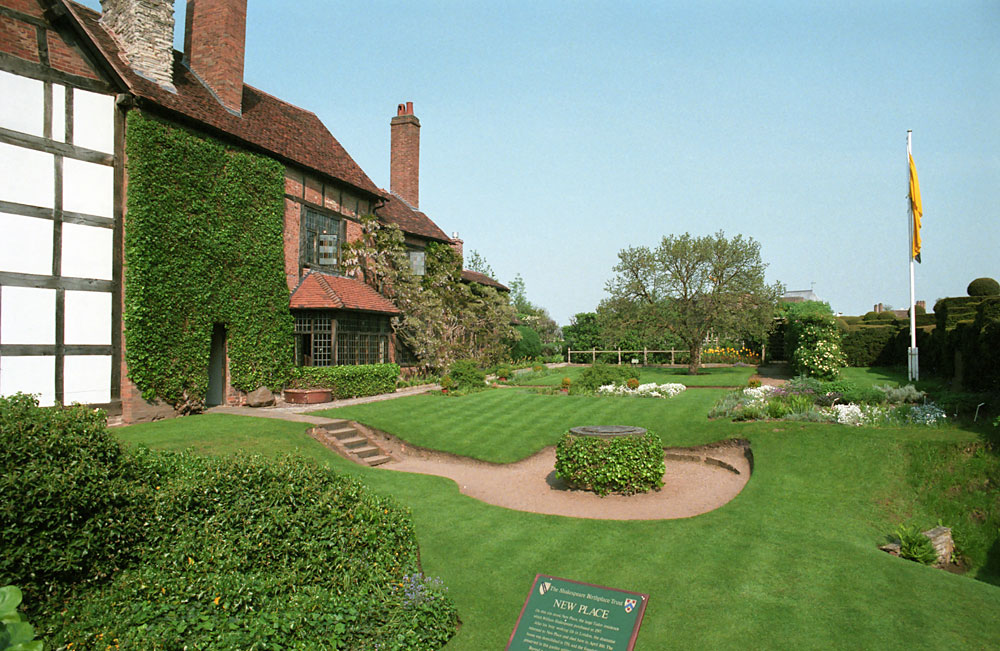
New Place, Stratford-upon-Avon. Photo May 1998.
New Place was the house that William Shakespeare lived in after he retired and moved back to Stratford and is where he died. Unfortunately the building itself no longer exists. The building on the left is Nash’s House, named after Thomas Nash, first husband of Shakespeare’s granddaughter. Both properties are part of the Shakespeare Birthplace Trust.
Thanks to Stephan for telling me about this!
If you have the Smithsonian Channel, they have an episode of their program “Skyview” called “The Tudor Age” with some stunning aerial imagery. I unfortunately don’t have an HDTV (yet), so I haven’t been able to watch the program (my cable company only has the HD version), but there are some clips on their website. I’ve embedded one below, but you can head over to the page for that episode to see more. A DVD of the show will be available in July.
If you’re a castle junkie like me, be sure to check out some of the other related videos!
Since I know some of you will appreciate my delight in this this – I finally managed to get a copy of Roger S. Thomas’ dissertation on Jasper Tudor! I had been trying to avoid having to order a copy, so I was very happy to finally see it turn up through the Center for Research Libraries (of which my university is a member) in digital form. Now I just need to find the time to read it. 🙂
In a follow-up to a post from last year, here is an update on the Stirling Heads. The replica set mentioned in the previous article have now been unveiled.
From the BBC:
A hand-carved replica set of 41 giant medallions that once covered the ceilings of Stirling Castle’s Royal Palace have been unveiled.
It took expert wood carver John Donaldson five years to reproduce the oak heads, which each measure a metre.
The original 16-century medallions feature vivid depictions of medieval kings and queens as well as mythological heroes.
Full article – including small set of images with a carving of Henry VIII and another possibly of Margaret Tudor.
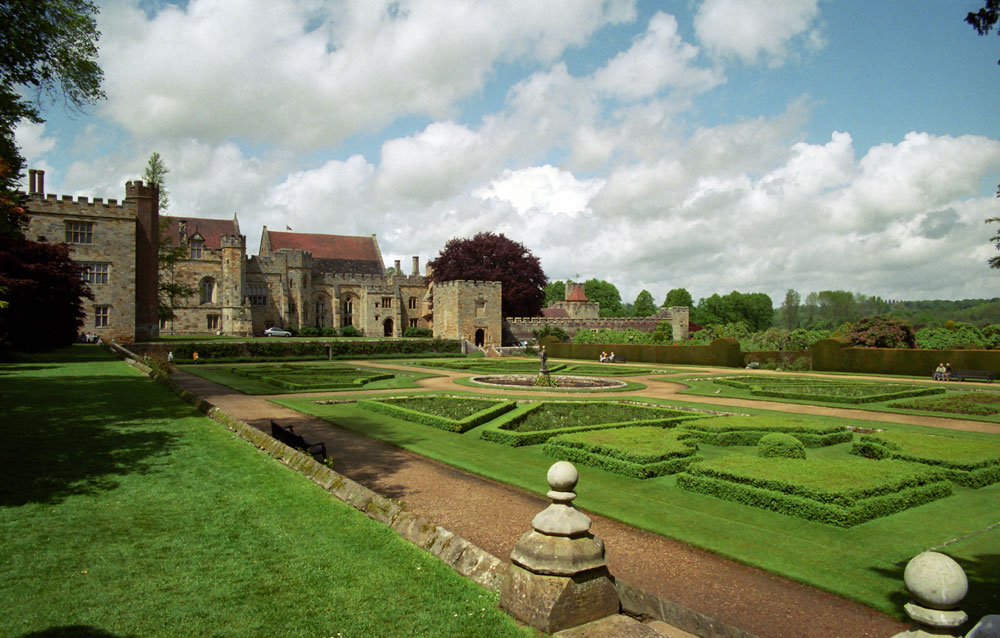
Penshurst Place and Gardens. Photo May 2003
May podcast show notes:
Henry VIII’s Twitter profile (by Historic Royal Palaces)
http://twitter.com/IamHenryVIII
The British Library’s Henry VIII: Man and Monarch podcasts
http://www.bl.uk/whatson/podcasts/exhibition/henry/index.html
The British Library’s Henry VIII: Man and Monarch blog
http://britishlibrary.typepad.co.uk/henry/
Christ’s College, Cambridge Margaret Beaufort commemoration event
http://www.christs.cam.ac.uk/news/events/pg/article==182
“English Renaissance Music” by La Primavera at Magnatune.com
http://magnatune.com/artists/primavera
*** One small correction to the podcast – I noticed I said that Margaret Beaufort died just three months after son, but I actually wrote two months, which is more accurate.
[Comments are closed on older posts. If you wish to make a comment, please contact Lara via the link in the sidebar.]
Spotted at The Anne Boleyn Files blog – head on over there for links to two programs from BBC Radio 4.
If you haven’t played with the British Library’s “Turning the Pages” site before, it is definitely worth a look if you love old books. They just added Henry VIII’s Psalter, which is currently on display in the Henry VIII: Man and Monarch exhibition.
(Spotted at the British Library’s Henry exhibition blog)
A new book is out about another anniversary this year – the first publication of a complete collection of Shakespeare’s sonnets in 1609. It seems that a lot of interesting things happened in years ending in a 9!

So Long as Men Can Breathe
By Clinton HeylinShakespeare’s Sonnets are famous the world over, but did their author intend to keep them from ever being published? In this lively, fascinating account of the publication of the Sonnets, noted biographer Clinton Heylin brings their convoluted history to light, beginning with the first complete appearance of the Sonnets in print in May, 1609. He introduces us to the “unholy alliance” involved in this precarious enterprise: Thomas Thorpe, the publisher, a self-described “well wishing adventurer;” George Eld, the printer, heavily embroiled in large-scale pirating; William Aspley, the prestigious bookseller, who mysteriously ended his association with Thorpe soon after. Leaving the calamitous world of Elizabethan publishing, Heylin goes on to chart the many editions of the Sonnets through the years and the editorial decisions that led to their present configuration. Passionate, astute, and brilliantly entertaining, the result is a concise and vivid history of perhaps the greatest poetry ever written.
Here’s the How to Order page from the publisher and my usual Amazon links are below (standard disclaimer – I earn a small amount from books purchased through the affiliate links):
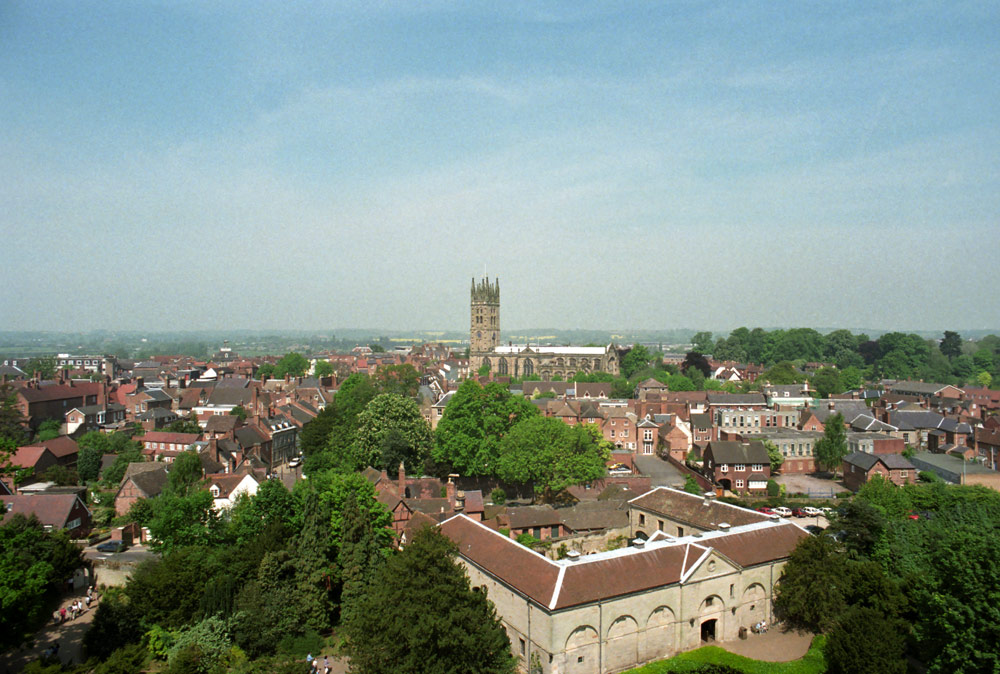
St. Mary’s as seen from the walls of Warwick Castle. May 1998.
The Collegiate Church of St. Mary, Warwick dates to the 12th century and was rebuilt in the 14th century. Ambrose and Robert Dudley (along with Robert’s wife Lettice and their son) are buried in the Beauchamp Chapel of the church.
Sorry I have been a little quiet on this blog over the last week or so! I’m just going to do a quick round up of a few things that I wanted to post about this week but got behind on.
From the London Evening Standard, an article about one of the winners at the Chelsea Flower show, which grew plants used in a recipe to create perfume for Elizabeth I.
Here’s another article about Henry VIII’s annulment request document that I blogged about previously.
Sent to me through Twitter – News on Alison Weir’s upcoming book launch at the Tower of London for her new bio on Anne Boleyn and details for a tour of Tudor England she’ll be leading in 2010, as well as news on other upcoming books (including a sequel to “The Lady Elizabeth”).
And finally, from Pop Tudors (the blog for the Showtime series “The Tudors”) – Ask a Tudor!. Your chance to ask Mark Hildreth, the actor playing Cardinal Reginald Pole, a question. You can submit them in the comments on the page linked to above.
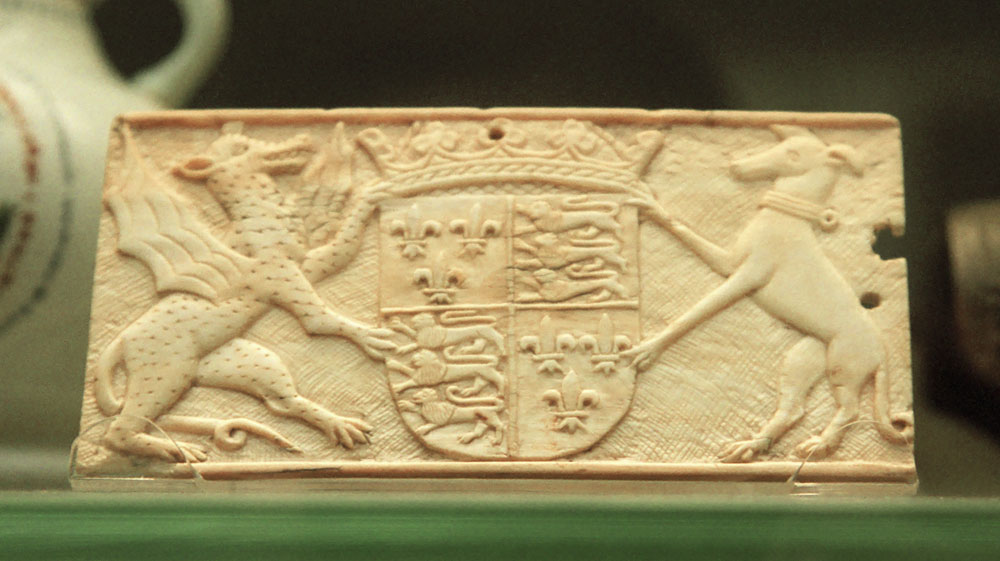
Ivory plaque with the arms of Henry VIII. British Museum, May 2003.
Here’s the page for this item at the British Museum website.
Just in case some of you haven’t been following the British Library blog or subscribed to their podcast for the Henry VIII: Man and Monarch, here is a link with the hour-long talk by David Starkey on the young Henry (1491-1509) (scroll down to get to Starkey’s talk).

