
Carving in the gardens at Hatfield, next to the Old Palace.

Carving in the gardens at Hatfield, next to the Old Palace.

Hever Castle. Photo May 1998.
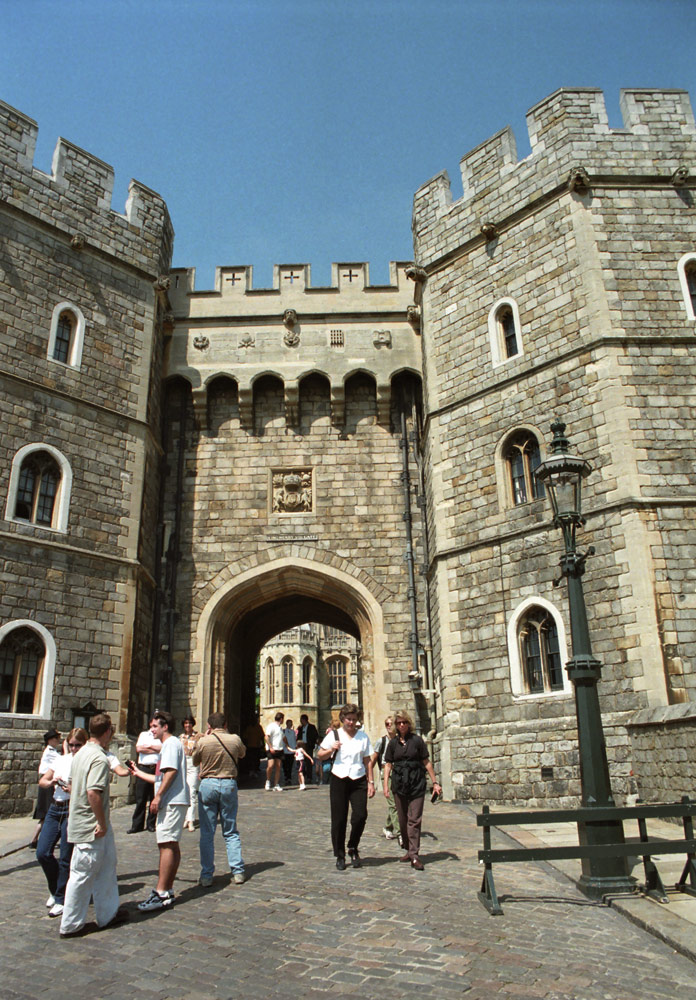
Henry VIII gate at Windsor Castle. Photo May 1998.
You can see St. George’s peeking through the arch. You can also see that it was a nice warm and sunny day when I was there!
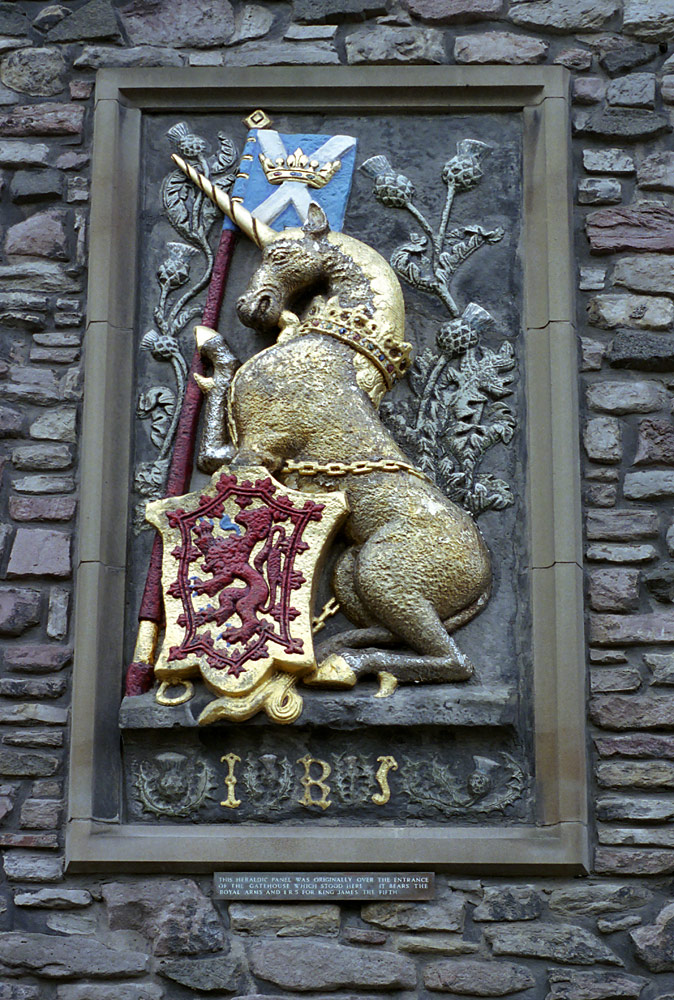
Heraldic panel with the arms of James V of Scotland at the Palace of Holyroodhouse. Photo May 2000.

Shakespeare’s Globe. Photo May 1998.
Sorry this is a couple of days late this week! I really just need a giant “pause” button on the rest of the universe so I can get caught up with everything…
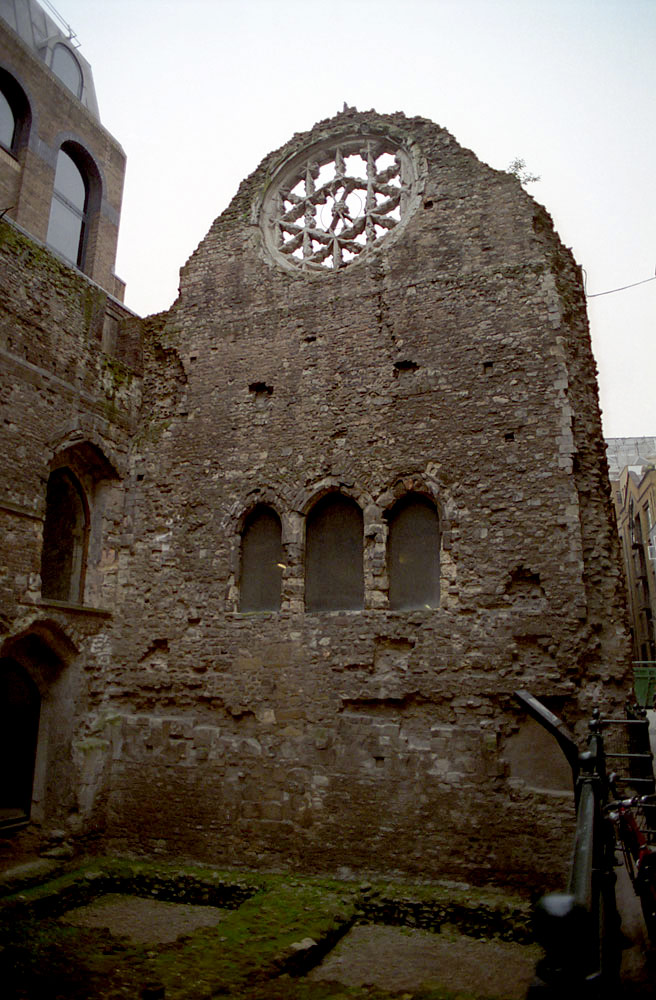
Winchester Palace. Photo June 2000.
Winchester Palace was the London residence of the Bishops of Winchester and was in use until the 17th century (it was mostly destroyed by fire in 1814). The Palace is on the south the Thames in Southwark and is near Southwark Cathedral, burial place of William Shakespeare’s brother Edmund. The part you see here is from the great hall and includes the remains of the structure for the rose window.
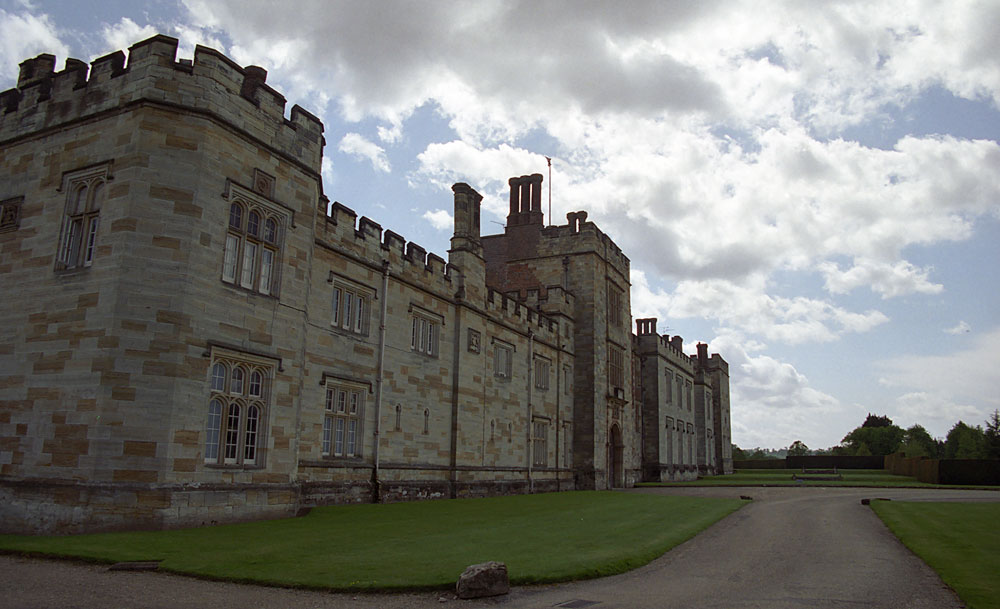
Penshurst Place. Photo May 2003.

Marker for Lady Jane Grey and others in the Chapel of St. Peter ad Vincula in the Tower of London. Photo May 1998.
I thought this would be an appropriate picture for this week since the anniversary of Jane’s (and Guildford’s for that matter) execution is Friday. I took this photo on my first visit to the Tower – May 19, 1998. There were roses on Anne Boleyn’s marker that day since it was the anniversary of her execution and I asked the Beefeater if I could take a photo of them. I don’t know if it was because I looked like a young and clueless American (which I was!) or what, but he said yes. After snapping that photo, I quickly shot this one as well.
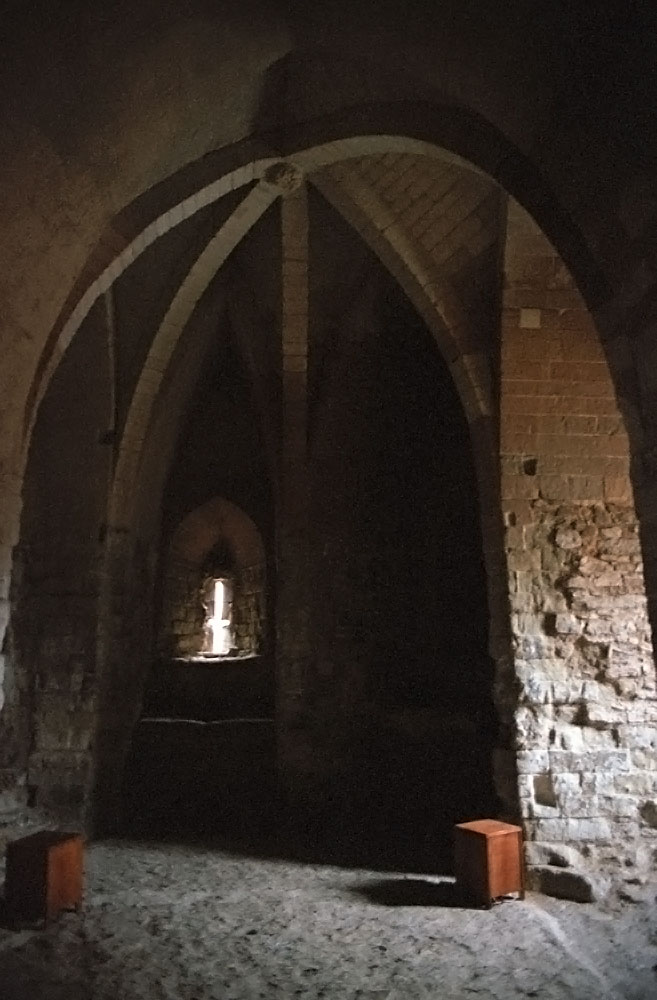
Thomas More’s cell in the Bell Tower in the Tower of London. Photo June 2000.
During the millennium celebrations, the Tower had a special display on Thomas More (with his hair shirt among other items) and opened the Bell Tower to the public. If I remember correctly, they escorted us in small groups through the private residences/offices and then up in to the tower. I seem to recall it being a tight fit, and of course, a working and living space, so not really appropriate to being open all the time. I’m glad I got a chance to see it while I did!
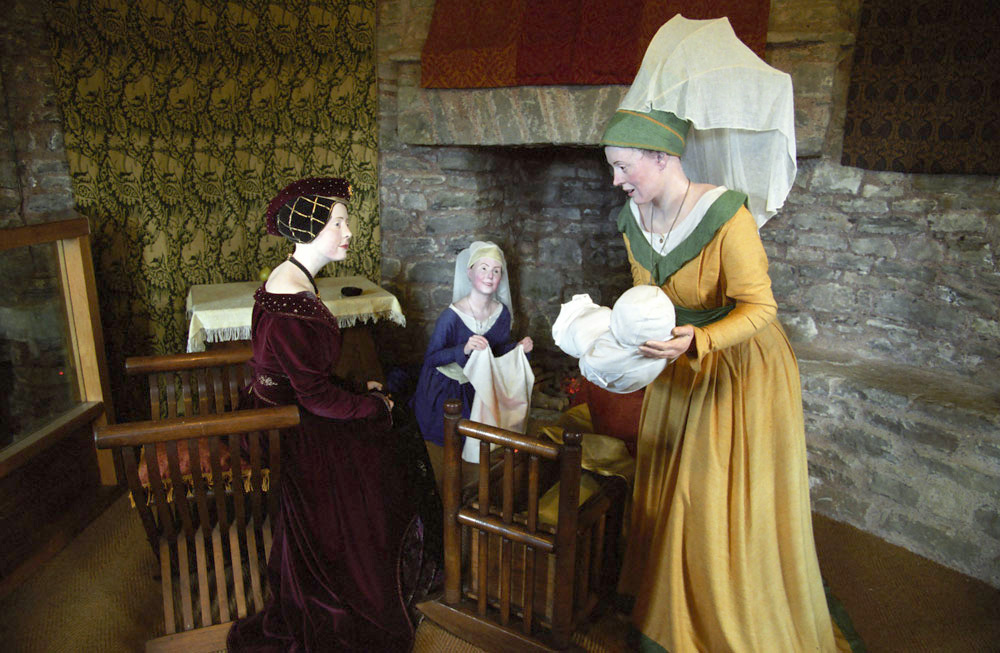
Nursery scene from the Henry VII tower at Pembroke Castle. Photo May 2003.
Okay, so maybe this is a little cheesy, but since Henry VII’s birthday is tomorrow I figured what the heck. 😉 And I love that medieval chair Margaret is sitting on!
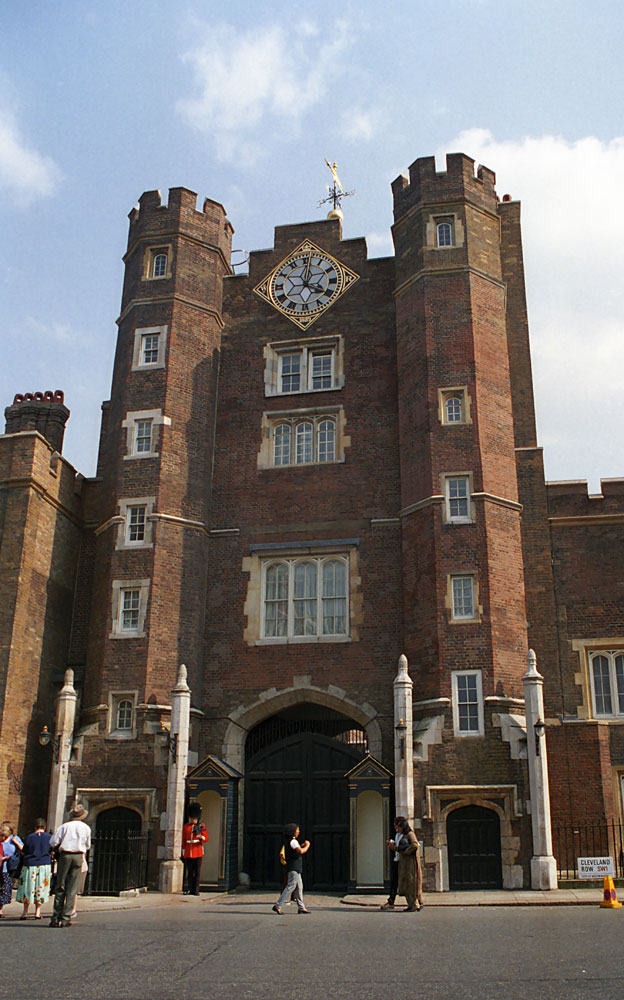
St. James’s Palace, London. Photo May 1998.
Perhaps because it isn’t open to the public I tend to forget about St. James’s, even though it was built by Henry VIII and quite a bit of the Tudor palace survives. You can learn more about the Palace at the official website of The British Monarchy.

Tomb of Cardinal Reginald Pole at Canterbury Cathedral. Photo May 2003.

The Old Palace at Hatfield with part of the recreated Tudor garden. Photo May 2000.

Patterned brick chimneys at Hampton Court Palace. Photo May 2000.
Because a lot of us have cold weather right now, a reminder of how the Tudors kept warm in winter. 🙂
I can’t believe we’re at POTW #52, meaning that I’ve been posting every week for a whole year. And there are still lots of photos out there for me to keep putting up – and hopefully I’ll add to the collection in the next few years.

Overlooking the entrance to Raglan Castle, Monmouthshire, Wales. Photo May 2003.
Raglan was the home of Henry VII as a boy when he was in the custody of the Herberts in the 1460s. Raglan is under the care of Cadw which oversees many Welsh historical places.

A section of the outer wall and moat of the Tower of London. Photo May 2003.

The Gatehouse and Henry VII Tower of Pembroke Castle. Photo May 2003.

Great Hall of Edinburgh Castle, Scotland. Photo May 2000.
The Great Hall of Edinburgh Castle is dated to the reign of James IV (r. 1488-1513) and still contains the original hammerbeam roof.
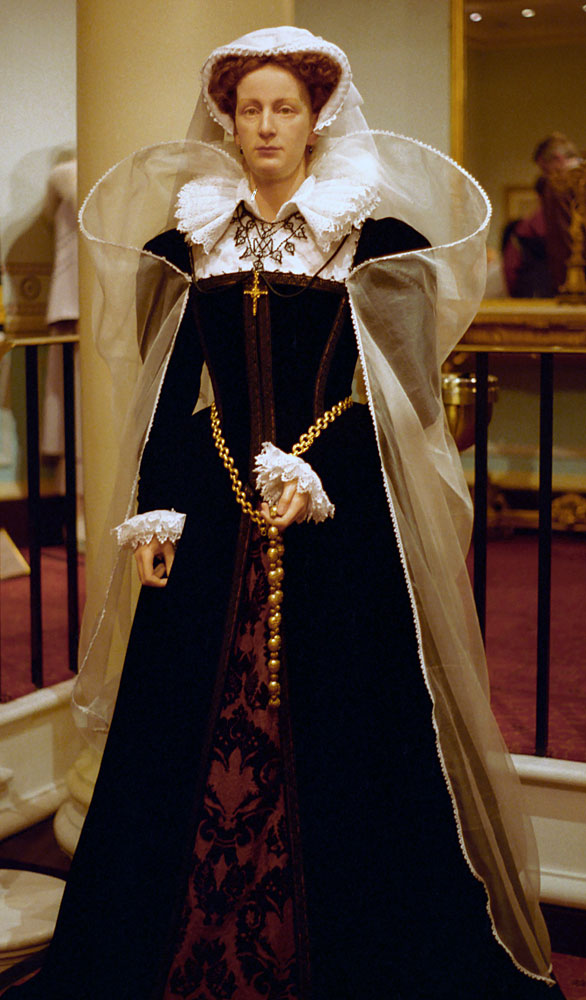
Wax figure of Mary Queen of Scots at Madame Tussauds London. Photo May 1998.
This is the last of the “Madame Tussauds series”, so we’ll be back to buildings, etc. next week!

Wax figure of Elizabeth I at Madame Tussauds London. Photo May 1998.
I swear I didn’t plan it so that this photo of Elizabeth would come one day after the 451st anniversary of her becoming queen. Happily, It just worked out that way!

