Tudor-era paneling returned to Raglan Castle

After being part of a cow shed for a while…

From the BBC:

Tudor wooden panelling, missing from a castle for more than 300 years, is to be returned to its home after once being part of a farmer’s cow shed.

It was among items taken from Monmouthshire’s Raglan Castle during the Civil War in the 17th Century.

But the large panel, once owned by a courtier of Henry VIII, was found after it was sold by a collector, who bought it from a farm for

New Yorker article on Queen Claude and her prayer book

Claude of France was the Queen Anne and Mary Boleyn served during their time at the French court. Her prayer book went on display at the Morgan Library & Museum back in May.

From the article:

In May, a tiny, exquisite volume went on display at the Morgan Library & Museum: a prayer book made for Queen Claude of France, who was born in the penultimate year of the fifteenth century. Claude, a near-contemporary of Anne Boleyn, who served her at the French court as a prepubescent lady-in-waiting, was betrothed at the age of six to her cousin Fran

Portrait of Elizabeth I as princess found

From the BBC:

A rare portrait of Queen Elizabeth I as a young princess has been discovered in a private collection at a stately home in Northamptonshire.
The portrait, dating from 1650 to 1680, was found in the Duke of Buccleuch’s collection at Boughton House.

It shows Elizabeth with siblings Edward VI and Mary I, father Henry VIII and his jester, Will Somers.
….
Tracy Borman said that when she was first sent a picture of the portrait she realised it had never been seen before.

“The more we found out, the more obvious it was that nobody had come across this,” she said.

“It’s clearly a copy of a lost original and it’s that mystery that we started to try to solve.

“It’s also a very different look to Elizabeth and comparing it to other portraits it helps us to solve the identity of other portraits – for example one always known as the Unknown Lady in the National Portrait Gallery.”

Full article (with link to enlarged full photo)

And here is a link at the NPG to a similar image that was previously thought to be Jane Grey, but now looks like it might be Elizabeth.

3000 years of jewelry set to go on display at the V&A

Yet another reason I need to get back over to the UK!

From The Telegraph:

Prepare to be dazzled – after years in storage the V&A’s jawdropping collection of jewellery from the past 3,000 years is about to go on permanent display.

On 24 May the William and Judith Bollinger jewellery gallery will open at the V&A, displaying 3,500 items from the museum’s collection, which is one of the finest and most comprehensive in the world and tells the story of European jewellery over the past 3,000 years.

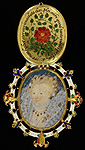
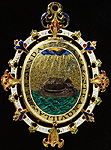
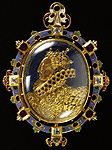
Chadour-Sampson pulls out another drawer and places in the palm of my hand a small locket, the Armada or Heneage jewel made about 1595, a gift from Elizabeth I to her vice-chamberlain, the poet and secret-service agent Sir Thomas Heneage. The locket depicts a profile portrait in gold of the queen up to her neck in a giant gold ruff, her head weighed down by wig and pearls, encircled by diamonds and Burmese rubies. Turn it over and there is a gold and enamelled portrait of an ark, representing the English church, riding through stormy seas, a cloud above raining down lightning on the frail vessel. Open it up and there’s a portrait of a much younger, more girlish Elizabeth, the real woman behind the symbol, or how she wanted to be seen – a wistful love token sent by an old woman.

Full article

Website of the Victoria and Albert Museum

And here are some images of the Elizabethan jewel described in the article (from the V&A website…. you can see larger images if you go to their image collection page and search for “Armada jewel”):

Artwork from The Chequers to go on display

Including the ring with portrait miniatures of Elizabeth I and Anne Boleyn (one of my favorite pieces from the period!).

From The Daily Mail:

A large group of paintings from the prime ministerial retreat Chequers, including a pair of Van Dycks and a locket ring owned by Elizabeth I containing portraits of herself and Anne Boleyn, is to go on public view for the first time.

Individual works have been loaned over the years but this is the first group loan and the 10 works will go on display at another country mansion, Compton Verney in Warwickshire, from June.

ther loaned works include portraits of Mary I, James I and Lady Mary Grey, a younger sister of Lady Jane Grey, who was confined to Chequers by Elizabeth I.

The special display at Compton Verney, Portaits from Chequers: Kings, Queens and Revolutionaries, will run from June 21 to September 7.

Full article

Website of Compton Verney

Two portraits for the price of one!

From the BBC:

A rare portrait, believed to be of Shakespeare’s only known patron, has been discovered using X-ray technology.

Art historians from Bristol University have found what they believe is a picture of Henry Wriothesley which was painted over in the 16th Century.

To the naked eye, it is a portrait of his wife Elizabeth Vernon, dressed in black and wearing ruby ear-rings.

The hidden picture was uncovered when the work was X-rayed in preparation for an exhibition in Somerset.

Radiography revealed that underneath the oil portrait of Elizabeth I’s maid of honour was a ghostly male figure – an older work which had been painted over.

Full article with picture

And here is an article from the Daily Mail with a larger photo.

Portrait of Elizabeth I in Roanoke gift shop may be the real deal

Until recently, an oil painting of Queen Elizabeth I had been hanging, unprotected and barely noticed, in the gift shop at The Elizabethan Gardens gatehouse.

It is believed that the portrait was painted in 1592, when Elizabeth would have been about 60 years old. It is one of the few portraits of the queen in her declining years.

If it is authentic, it could be worth millions.

Society of Antiquaries celebrates anniversary with large exhibition

From The Guardian:

The Anglo-Saxon kings, newly restored and on public display for the first time in 500 years, gaze out regally, showing no signs of having spent a century walled up in an outside lavatory in Kent.

The kings are among the treasures which the Society of Antiquaries is putting on display to celebrate its 330th birthday, in the galleries of its next door neighbour, the Royal Academy. The imposing but eccentric collection includes Tudor royal portraits described by David Starkey, an expert on the history of the period, as “staggering”[.]

The life size paintings of Athelstan, and another unidentified Anglo Saxon king, are also royal propaganda. They are completely fictional portraits, but were painted for Henry VII, probably for his great hall at Eltham Palace, to assert his own place in the pagaent of English history. They were rediscovered in 1813, turned back to front and used as wainscotting in an outside lavatory at Baston House in Kent, along with fragments of four other kings, all hacked to pieces to fit the wall space.

The exhibition runs through December.

Full article

Society of Antiquaries of London website

Update: Here’s another good article (with slideshow) from The Guardian

Henry VIII in the eye of a needle


Willard Wigan, an artist who works on the microscopic scale has sold his collection to John Lloyd. Included in the collection is a sculpture of Henry VIII and Wives done in the eye of needle (detail of Henry and two wives above). You can see the full version of the Henry VIII piece and read about other works in This is London and the Times Online.

Yet more portrait news

The first is a follow-up to something that I posted back in May and July 2006 about a Holbein portrait of Sir Thomas Wyatt the Younger that was up for auction. It failed to sell in July after there were questions about whether or not it was really by Holbein. But now it has been re-authenticated and will go up for sale again, and this time for

A few follow-ups

A bit more on the DNA testing of Mary Tudor’s hair (including a picture of the locket):

HOPES that a lock of royal hair kept in west Suffolk could solve the centuries-old mystery of what befell the Princes in the Tower appear to have been quashed by a leading cleric.

It is thought these [bones] might belong to the two princes which, using modern DNA testing techniques, could have been checked against the lock of hair in Bury, because Mary Tudor, the sister of Henry VIII, would have the same mitochondrial DNA as the princes.

Such a possibility has now been ruled out by the Dean of Westminster Abbey who said:

Update on Jane Miniature

This is the image in question in the article that I linked to last night. There was an article in the Telegraph today that included the picture. When I first read the description in the article, this is the one that I was picturing, so I was delighted to see that was indeed it. The scan that I put in above came from a catalog of an exhibition called “Artists of the Tudor Court – The Portrait Miniature Rediscovered” by Roy Strong. I don’t have the book with me right now, but I’ll check it tonight if I get a chance and post the information that the book has on the miniature.

Here’s the article from the Telegraph

Another possible portrait of Lady Jane Grey

From The Independent:

Brooch identifies portrait as Lady Jane Grey, the girl who reigned for nine days

By Louise Jury, Arts Correspondent
Published: 05 March 2007

For decades, the female sitter in this 16th-century miniature painting remained unidentified. But after investigating the woman’s jewellery, the historian David Starkey is now convinced this is the only known portrait of Lady Jane Grey painted during her lifetime to have survived.

Full article

I’ll update if I find some links to more articles or images

Update: (link died… so I’ve removed it)

Plus, I forgot to mention it last week, but Alison Weir’s first novel, Innocent Traitor, came out in the US last week. Here are links to Amazon.com and Amazon.uk for the book:


Late 15th century altar paintings now on display

From the BBC:

A pair of late 15th Century altar paintings are going on display in London after a 450-year absence.
The panels, thought to have furnished a chapel at Westminster Abbey, passed intact through the upheavals of the Reformation.

They are now on display at the Museum of London.

They are thought to have been removed from Westminster Abbey either in 1536, when it was stripped of its shrines and images, in 1540, when it briefly converted into a cathedral, or in around 1547 during the strict Protestantism of Edward VI.

Full article

24 Hour Museum also has an article: Museum of London Aquires Rare Medieval Altar Panels

Both articles have pictures of the panels.

Follow up on Lady Jane Grey portrait

Back in January I posted some links to articles of a possible period portrait of Lady Jane Grey. Here’s a follow-up from The Guardian:

The National Portrait Gallery has bought a painting believed to be of Lady Jane Grey – until now the only English monarch since Henry VII thought to lack a contemporary or near-contemporary portrait.

Dendrochronology, by which a piece of wood can be accurately dated, has established that the panel on which it is painted was cut down around 1593. So the picture was painted around 50 years after Lady Jane’s execution.

Tarnya Cooper, of the National Portrait Gallery, believes it is a copy of a lost original, possibly created in Lady Jane’s lifetime.

Full article here